Choosing wall sconces for your home is exciting, but figuring out where exactly to put them can feel like a guessing game. You’re trying to create a beautiful, functional space, and the last thing you want is a light fixture that’s too high, too low, or awkwardly placed. Getting the best height placement for wall sconces isn’t just about aesthetics, it’s also crucial for how the light actually performs in your room. A perfectly positioned sconce can elevate your decor and provide just the right amount of illumination, while a misplaced one can cast harsh shadows or simply feel “off.” We’ll dive into the ideal wall sconce height for different areas and functions, helping you get it right the first time.
General Guidelines for Optimal Wall Sconce Height
When it comes to general areas like hallways, living rooms, or any space where sconces are primarily for ambient or accent lighting, there’s a widely accepted starting point. You’ll typically want the center of the sconce to be somewhere between 60 to 70 inches from the finished floor. This range usually places the fixture roughly at eye level for most people, or just slightly above. The goal is to prevent direct glare into someone’s eyes while still allowing the light to spread effectively across the wall or into the room.
How Room Ceiling Height Affects Wall Sconce Height
It’s important to remember that these are just starting points. If you’ve got higher ceilings, say 9 or 10 feet, you might push that wall sconce height a bit higher, perhaps closer to 70 inches, to maintain visual balance. For standard 8-foot ceilings, staying closer to the 60-66 inch mark often works best. You don’t want the sconce to feel dwarfed by a tall wall or too cramped if your ceilings are lower. Always hold the fixture up against the wall, or even tape a paper cutout, to visualize the scale before drilling.
Expert Tip: Think about the type of bulb you’re using. An exposed filament bulb will have a different glare factor than a frosted bulb or one hidden within the fixture. This can subtly influence your final wall sconce height decision.
Specific Wall Sconce Height for Different Spaces
Different rooms have different needs, and that means the best height placement for wall sconces will vary significantly depending on where they’re installed.
Hallways and Corridors
In hallways, wall sconces often serve as both decorative elements and essential wayfinding lights. Since people are typically walking through these spaces, you want the light to be welcoming without being intrusive. Sticking to that 60-66 inch range for the center of the fixture is usually ideal here. If you’re planning multiple sconces down a long corridor, you’ll also need to consider spacing, which we’ll get into a bit later. For long hallways, consistent wall sconce height creates a sense of order and elegance.
Living Rooms and Family Rooms
Here, sconces often complement overhead lighting or lamps, adding warmth and atmosphere. They’re typically placed on either side of a fireplace, a large piece of art, or flanking a sofa. Since people are usually seated in these rooms, the glare factor becomes even more critical. You’ll often find the ideal wall sconce height here is slightly higher than eye level when seated, perhaps 66 to 72 inches from the floor, depending on your furniture. This prevents direct light from hitting someone’s eyes when they’re relaxing on the couch.
Dining Rooms
Dining rooms are another place where sconces contribute to the ambiance, often complementing a chandelier over the table. Here, the wall sconce height needs to work with the scale of the room and any large furniture. Placing them around 60-65 inches from the floor is common, particularly if they are flanking a buffet or a piece of art. The goal is to create soft, indirect light that enhances the dining experience, not to be a primary light source.
Wall Sconce Height for Task Lighting
When sconces are meant for specific tasks, like reading or grooming, the rules shift dramatically. Their placement becomes much more personal and functional.
Bedside Sconces
These are popular alternatives to table lamps, freeing up nightstand space. For bedside reading, the wall sconce height is critical for comfort and effectiveness. You’ll want the bottom of the shade or the light source itself to be roughly 24-30 inches above the top of your mattress. This places the light exactly where you need it for reading without disturbing a partner, and it prevents glare. It also means you’ll need to know your bed frame and mattress height before you finalize the sconce placement.
Bathroom Vanity Sconces
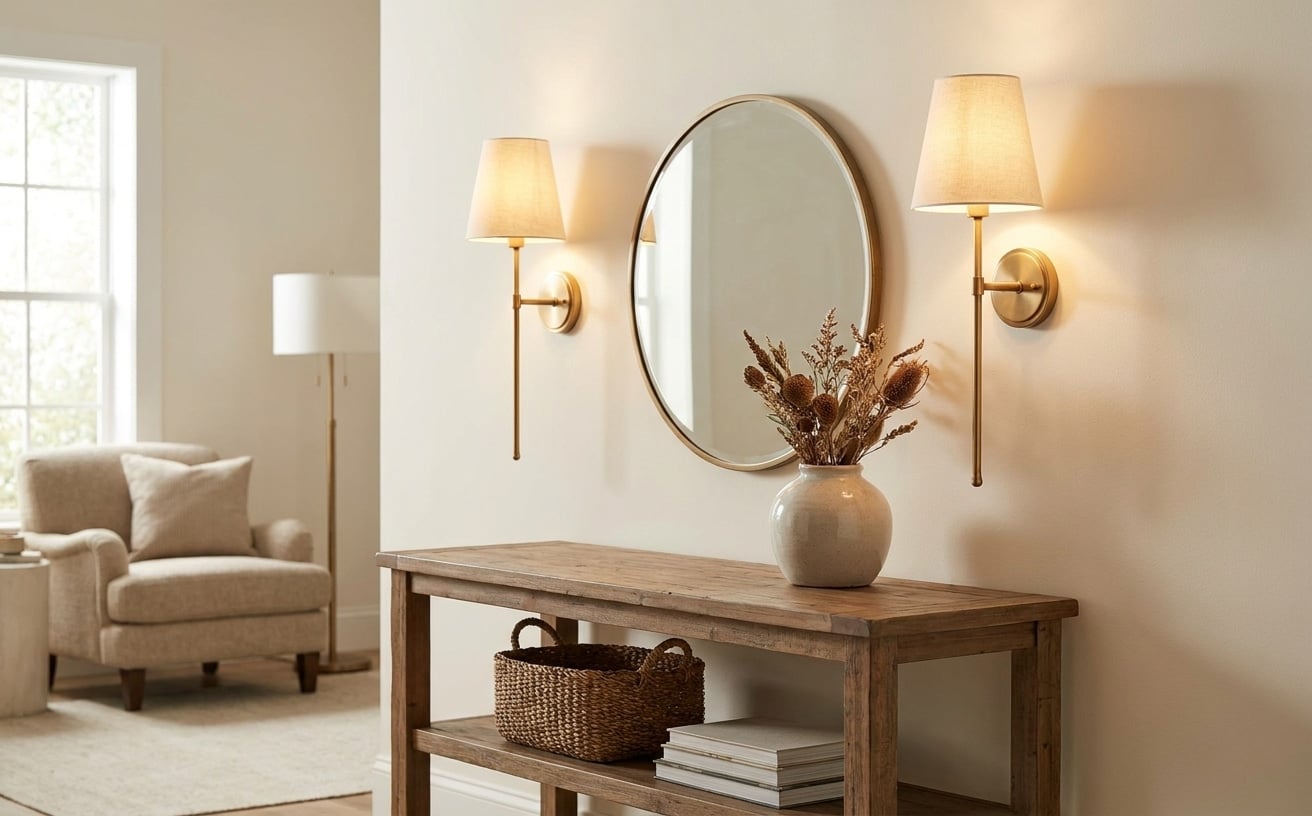
This is where I’ve seen this mistake a lot: sconces placed too high or too low around a mirror, creating unflattering shadows. The best height placement for wall sconces flanking a bathroom mirror is to have the center of the fixture at about 60-66 inches from the finished floor. This height ensures the light illuminates your face evenly from both sides, eliminating shadows under your chin or eyes. If you’re using a single sconce above the mirror, aim for the bottom of the fixture to be about 75-80 inches from the floor, or roughly 8-10 inches above the top of the mirror.
| Pros of Sconces Flanking a Mirror | Cons of Sconces Flanking a Mirror |
|---|---|
| Even, shadow-free illumination | Requires more wall space |
| Creates a balanced look | Can be harder to install (two fixtures) |
| Reduces glare compared to overhead | Might limit mirror size options |
When planning for new electrical wiring for sconces, especially in a bathroom, I’d strongly recommend hiring a licensed electrician in your area. It’s worth every penny for peace of mind and safety.
Spacing Wall Sconces: The Rule of Three (and Beyond)
Once you’ve nailed down the ideal wall sconce height, figuring out the spacing is the next crucial step. Sconces look best when they’re balanced and proportional to the wall space, furniture, or architectural features around them.
Spacing Along a Wall or Hallway
For a long hallway, you’ll want to space multiple sconces evenly. A good rule of thumb is to divide the total wall length by the number of sconces plus one, to find your approximate spacing. For example, on a 15-foot wall (180 inches) where you want two sconces, you’d divide 180 by 3 (2 sconces + 1 segment) to get 60 inches. This means each sconce would be 60 inches from the end of the wall and 60 inches from each other. Don’t be afraid to adjust slightly for doors or artwork. A consistent wall sconce height across these fixtures is vital for a cohesive look.
Spacing Around Furniture or Artwork
When flanking a mirror, a piece of art, or a doorway, you’ll want the sconces to be roughly 6-12 inches away from the edge of the item they’re accenting. This provides enough visual breathing room so they don’t look crowded, but still close enough to feel connected. For example, if you have a 36-inch wide mirror, the sconces might start 6 inches out from either side, making the total illuminated span 48 inches.
The Importance of Symmetry and Balance
Symmetry often feels natural and calming. When using two or more sconces, ensuring they’re at the same wall sconce height and evenly spaced creates a harmonious look. However, don’t be afraid to break strict symmetry for a more modern, eclectic feel if that’s your style, but always ensure there’s still a sense of visual balance. Our wall sconce collection has a range of options at different price points if you’re shopping for new fixtures.
Considerations for Wall Sconce Height with Varied Fixture Sizes
A larger, more ornate sconce might demand a slightly different placement than a small, minimalist one. You’re always trying to balance the fixture’s size with the overall wall real estate. A really substantial sconce might need a bit more vertical clearance, influencing the best height placement for wall sconces in that specific spot.
Factors That Can Change the Rules for Wall Sconce Height
While guidelines are helpful, every room is unique. Several factors can influence the ideal wall sconce height and spacing, requiring a flexible approach.
Ceiling Height and Room Scale
As mentioned earlier, higher ceilings often allow for a slightly higher wall sconce height. In a very large room, sconces might be spaced further apart to feel proportionate. Conversely, in a smaller room, closer spacing might be necessary, and you’ll want to be extra careful not to overwhelm the space with too many or too large fixtures.
Furniture Height and Placement
The height of your sofa, console table, or headboard will directly impact the ideal wall sconce height. You don’t want the bottom of your sconce to be hidden behind a tall headboard, nor do you want it to look awkwardly floating far above a low-slung credenza. Always consider the context of the furniture it will be near.
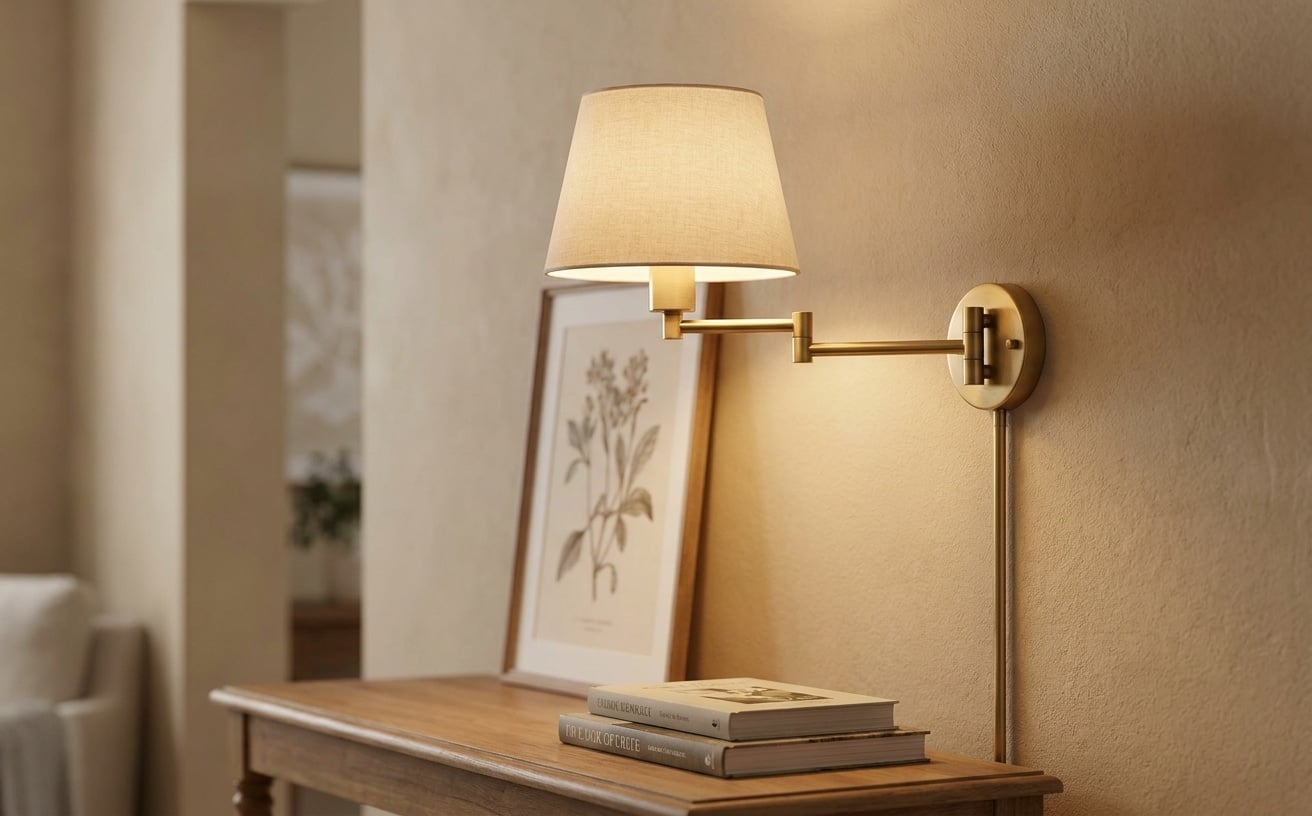
Architectural Features
Wall moldings, wainscoting, door frames, and window trims can all dictate or influence sconce placement. You’ll want to avoid interrupting these features or having the sconce feel visually disconnected. Sometimes, you’ll need to adjust the wall sconce height slightly to sit perfectly within a wall panel or just above a trim piece. This is where a little careful planning makes a big difference.
Common Mistakes to Avoid with Wall Sconce Height
Getting the placement wrong can be frustrating, especially after all the effort of choosing the perfect fixtures. Here are a few pitfalls to steer clear of:
- Mounting Too High: This is probably the most common error. Sconces that are too high lose their intimacy, can cast light onto the ceiling where it’s not needed, and simply look awkward. They’ll also provide less direct light where you might want it.
- Mounting Too Low: While less common than too high, placing sconces too low can lead to uncomfortable glare, especially if the fixture has an exposed bulb. It also makes the room feel cramped and the light can be blocked by furniture or people.
- Ignoring the Bulb Type: An upward-facing sconce with an exposed bulb will cast light differently than a downward-facing one with a shaded bulb. Always consider the light distribution when planning your wall sconce height.
- Lack of Symmetry or Balance: Uneven spacing or differing wall sconce height levels between multiple fixtures can make a room feel off-kilter. Unless you’re intentionally going for an asymmetrical, artistic look, strive for balance.
- Not Considering the Door Swing: In hallways or smaller rooms, make sure your sconce isn’t in the path of a door opening. It sounds obvious, but I’ve seen it happen!
Planning Your Wall Sconce Height and Spacing
Before you make any permanent decisions, grab a measuring tape and some painter’s tape or cardboard cutouts of your sconces. Temporarily tape them to the wall at your proposed wall sconce height and spacing. Live with it for a day or two. Look at it from different angles, both standing and sitting. This simple step can save you a lot of hassle and ensure your best height placement for wall sconces is truly perfect for your space.
Frequently Asked Questions
How high should sconces be above a fireplace?
When flanking a fireplace, the center of the sconce should typically be about 60-66 inches from the floor, similar to general ambient lighting. However, if you have a very tall mantel or a large piece of art above the fireplace, you might adjust this slightly higher to maintain visual balance and avoid crowding.
Can I use sconces in a room with low ceilings?
Yes, you absolutely can! For rooms with 8-foot ceilings, aim for the lower end of the recommended wall sconce height, around 60-64 inches from the floor. Choose fixtures that are less visually heavy or have an upward-facing light to draw the eye up, making the ceiling feel a little taller.
What’s the best spacing for multiple sconces in a hallway?
For optimal spacing in a hallway, divide the total wall length by the number of sconces plus one. This will give you equal segments between each sconce and from the ends of the wall. For example, if a 10-foot wall needs two sconces, space them 40 inches from each end and 40 inches from each other (120 inches / 3 = 40 inches).
Should sconces be installed at the same height as wall art?
Not necessarily. While you want them to feel harmonious, sconces serve a different purpose than wall art. Wall sconce height is primarily determined by light distribution and preventing glare, whereas art is hung at eye level for comfortable viewing. Aim for a balanced arrangement where the sconce either highlights the art or complements it without competing.
What if I have sloped ceilings?
For sloped ceilings, the general wall sconce height guidelines still apply relative to the floor. However, you’ll need to ensure the fixture itself can be mounted securely and appears level against the wall. Some sconces are designed with adjustable mounts for sloped surfaces, but most wall sconces assume a flat vertical surface.
Getting the perfect wall sconce height and spacing can truly transform a room. With these tips, you’re well-equipped to make informed decisions that will enhance your home’s beauty and functionality. We encourage you to explore our wide selection of wall sconces to find the perfect style for your space.