Stepping into a room with soaring ceilings can feel incredibly grand, but when it comes to lighting, these magnificent spaces often present a unique challenge. You don’t want your fixtures to look tiny and lost, nor do you want harsh glare that washes out the drama. Getting your high ceilings lighting just right isn’t a minor detail, it’s about crafting an atmosphere, highlighting architectural features, and making the room feel inviting, not cavernous. We’re going to explore how to choose lighting for high ceilings design that truly elevates your home, transforming those tall walls into a statement.
Understanding the Scale of Your Space
The biggest mistake I’ve seen homeowners make with high ceilings is simply underestimating the sheer volume of air they need to light. A standard 8-foot ceiling light just disappears in a 15-foot room. You’ve got to think big, not just in terms of fixture size, but also in how the light spreads and interacts with the space. It’s not just about brightness, it’s about presence and proportion.
Why Scale Matters for High Ceilings Lighting
When you’re dealing with vaulted or cathedral ceilings, the light fixture isn’t just a utility, it’s a piece of art. It needs to command attention without overwhelming the room. A fixture that’s too small will look like an afterthought, leaving the upper reaches of your room feeling dark and neglected. Conversely, something too large or too low can block views or make the room feel cramped despite its height. Getting the scale right is the first step to successful high ceilings lighting.
Choosing the Right Fixtures for Dramatic Effect
Different types of lighting fixtures serve different purposes, and you’ll likely need a mix to create a balanced and beautiful effect in a room with high ceilings. Don’t rely on a single overhead light; think in layers. For anything involving new wiring or a heavy chandelier, I’d strongly recommend hiring a licensed electrician in your area. It’s worth every penny for peace of mind and safety.
Chandeliers and Pendants: The Stars of High Ceilings Lighting
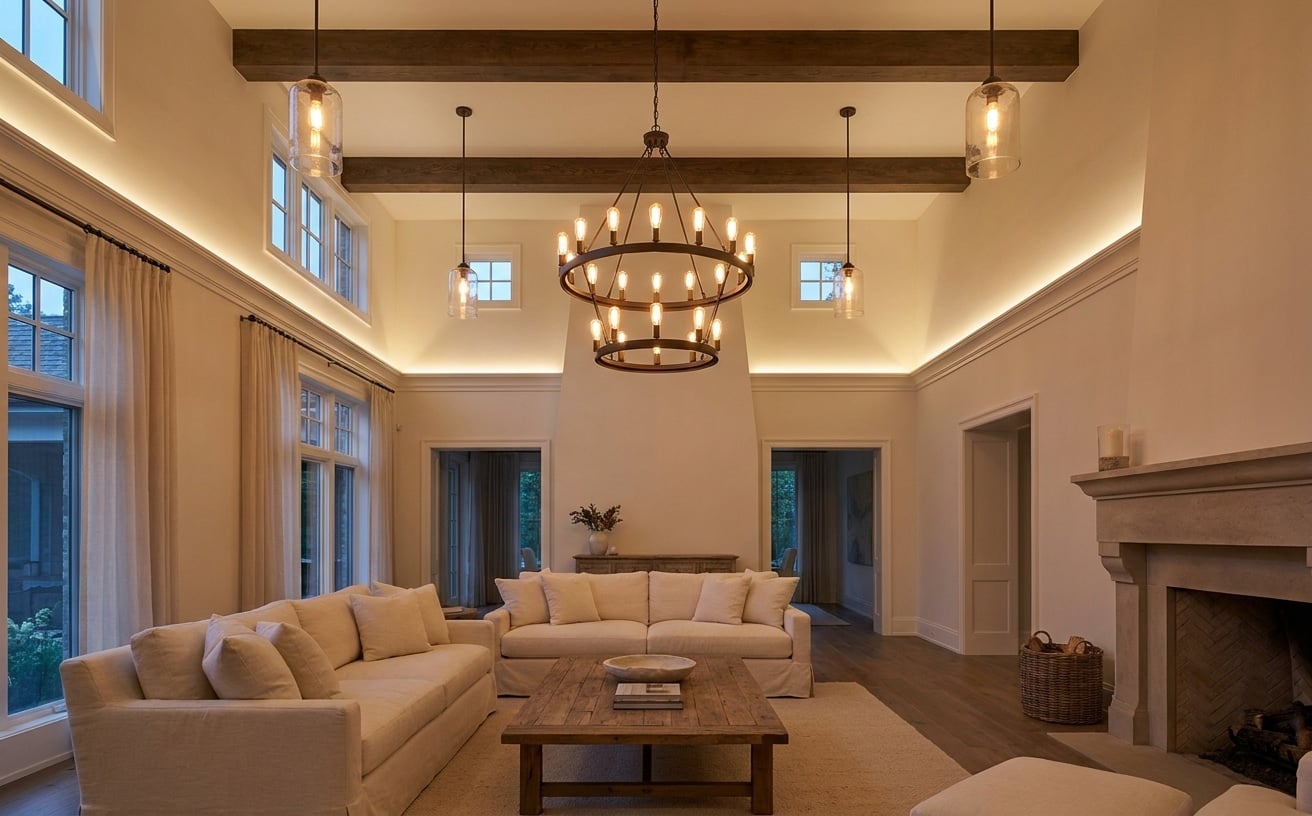
These are your primary statement pieces. For tall rooms, you’ll want fixtures with significant vertical drop or a substantial diameter.
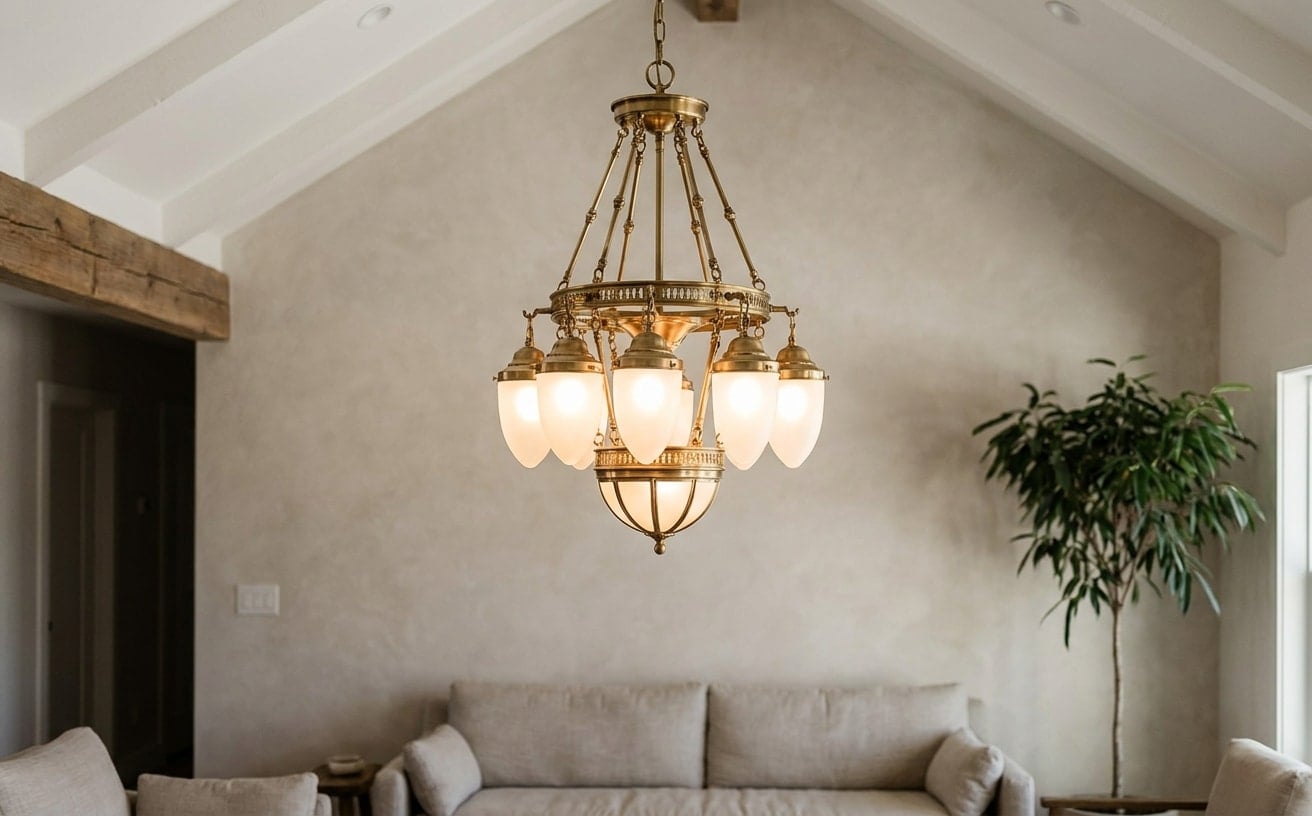
* Chandeliers: Often the focal point, they can fill vertical space beautifully. Look for multi-tiered designs or those with long, cascading elements. A grand chandelier can define a dining area or make an entryway truly breathtaking.
* Pendants: While often smaller than chandeliers, you can use multiple large pendants in a cluster or linear arrangement to achieve a similar effect, especially over kitchen islands or long dining tables in open-concept spaces with high ceilings. They offer a more contemporary feel than traditional chandeliers.
| Pros | Cons |
|---|---|
| Excellent focal point | Can be challenging to clean |
| Fills vertical space dramatically | Installation often requires professional help |
| Wide range of styles available | May require special bulbs for height |
Wall Sconces and Uplights: Adding Ambiance and Dimension
Don’t forget your walls! High ceilings often mean tall walls, which can look bare without proper illumination.
* Wall Sconces: Placed at eye level (or slightly above, around 60-66 inches from the floor) along perimeter walls, sconces add a horizontal layer of light that makes the room feel more intimate. They can highlight artwork or architectural details.
* Uplighting: Floor lamps with an upward beam or recessed lighting pointed towards the ceiling can wash the upper walls and ceiling with light. This technique emphasizes the height of the room and creates a soft, ambient glow. It’s fantastic for making a space feel larger and more inviting.
Expert Tip: Think about the “fifth wall” (your ceiling). Washing it with indirect uplighting can make the room feel larger and brighter without creating harsh glare, especially effective for showcasing interesting ceiling textures or beams.
Recessed and Track Lighting: Functional and Flexible
While they might not be the dramatic centerpieces, recessed and track lights are crucial for practical high ceilings lighting.
* Recessed Lights: These are excellent for general illumination and task lighting. You’ll need more powerful bulbs and potentially wider beam angles to ensure the light reaches the floor effectively. Place them strategically to illuminate specific areas, like a reading nook or kitchen counter.
* Track Lighting: Offers flexibility. You can direct individual heads to highlight different features or artwork, which is perfect for evolving decor or gallery walls in a tall space.
If you’re shopping for any type of overhead fixture, our contemporary lighting collection has a range of options at different price points.
Sizing Your Fixtures: It’s All About Proportion
Getting the size right is probably the most critical part of choosing high ceilings lighting. A common guideline for chandelier diameter is to add the length and width of the room in feet, then use that number in inches for the fixture’s diameter. So, for a 15-foot by 20-foot room, you’d look for a chandelier around 35 inches in diameter. For extra tall rooms, you might even go a little larger to ensure it commands enough presence.
When considering the height of a chandelier or pendant in a room with high ceilings lighting, you have more leeway.
* In an entryway: You want the bottom of the fixture to be at least 7 feet from the floor to avoid head bumps, but for a very high ceiling (15+ feet), you can go higher, even 8-10 feet from the floor, to really fill that vertical space.
* Over a dining table: The bottom of the fixture should hang about 30-36 inches above the tabletop. This creates an intimate zone for dining without obstructing views.
* In a living room: If it’s a central fixture, ensure it doesn’t block sightlines or feel too imposing. You might hang it a bit higher than in an entry, perhaps 8-10 feet from the floor, depending on the ceiling height.
High Ceilings Lighting Fixture Height Examples
Let’s say you have a 15-foot ceiling:
* Entryway: A chandelier could hang with its lowest point 9-10 feet from the floor. This still leaves 5-6 feet of chain/rod above it, creating a striking vertical element.
* Dining Room: Over a table, the 30-36 inch rule still applies, meaning a good portion of the fixture’s chain or rod will be visible, contributing to the sense of height.
* Open Living Space: If the fixture isn’t over furniture, aim for the bottom to be around 8-9 feet off the floor. This allows comfortable passage underneath while still making an impact.
Remember, these are starting points. Trust your eye, and when in doubt, it’s always better to go slightly larger and hang a bit lower (within reason) to ensure the fixture has the presence it needs. Again, for any permanent installation or heavy fixture, it’s best to consult a licensed electrician. They’ll ensure safe mounting and proper wiring.
Placement is Key: Maximizing Impact and Function
Strategic placement transforms a well-lit room into an artful experience. With high ceilings, you’ve got a lot of vertical canvas to work with.
- Focal Point: Often, your main chandelier or large pendant will be centered in the room or over a key piece of furniture like a dining table. This anchors the space and draws the eye upward.
- Layering Light: This is crucial for high ceilings lighting. You’ll want:
- Ambient Lighting: General illumination from recessed lights, a large chandelier, or uplights. This forms the base.
- Task Lighting: Focused light for activities like reading, cooking, or working. Think floor lamps, table lamps, or specific recessed lights over countertops.
- Accent Lighting: Highlights architectural features, artwork, or plants. Wall washers, picture lights, or narrow-beam spotlights work well here.
- Vertical Illumination: Don’t let the upper walls and ceiling disappear into darkness. Use sconces, track lighting, or even strategically placed floor lamps that direct light upwards to illuminate these areas. This helps to reduce stark shadows and create a more uniform, inviting glow.
Control and Ambience: Dimmers and Smart Solutions
Having a stunning selection of high ceilings lighting fixtures is only half the battle. How you control them makes all the difference in creating the perfect atmosphere.
- Dimmers are Non-Negotiable: For every light fixture in a room with high ceilings, install a dimmer switch. It’s that simple. You’ll want bright, functional light sometimes, but for evening entertaining or a cozy night in, the ability to soften the glow is essential. Dimming lets you adjust the mood, save energy, and extend bulb life. It’s truly a game-changer for tall spaces.
- Smart Home Integration: Modern lighting control systems or smart bulbs take dimming to the next level. You can program scenes (e.g., “Dinner Party,” “Movie Night”) that adjust multiple lights to specific brightness levels and even color temperatures with a single command. This is incredibly useful for complex high ceilings lighting schemes where you might have many different circuits to manage.
Frequently Asked Questions
What’s the best high ceilings lighting for a living room?
For a living room with high ceilings, you’ll want a layered approach. Start with a large, impactful chandelier or a cluster of pendants for ambient light. Supplement this with recessed lighting for general illumination, and add wall sconces, floor lamps, or picture lights to provide accent lighting and make the space feel cozier.
How high should a chandelier hang in a tall entryway?
In a tall entryway, the bottom of the chandelier should typically be at least 7 feet from the floor to allow people to walk underneath comfortably. However, if your ceilings are particularly high (15 feet or more), you can often hang it even higher, around 9-10 feet from the floor, to create a more dramatic vertical statement and fill the voluminous space effectively.
Can I use recessed lights with high ceilings lighting?
Yes, absolutely! Recessed lights are great for high ceilings lighting, but you’ll need to choose the right kind. Look for fixtures with higher wattage bulbs or those specifically designed for tall ceilings, often with wider beam angles to spread light more effectively. You’ll also likely need more recessed fixtures than you would in a standard 8-foot ceiling room to ensure adequate illumination.
What about natural light for high ceilings?
Natural light is a wonderful asset for high ceilings, especially with large windows. Maximize it during the day, but remember that even with ample natural light, you’ll still need a robust artificial lighting plan for evenings and overcast days. Use sheer curtains or blinds that don’t block the light entirely but offer some privacy and glare control.
Illuminating high ceilings well is a blend of art and science. It’s about respecting the grandeur of the space while making it feel livable and warm. Take your time, plan your layers, and don’t be afraid to think big. We invite you to explore our collections and find the perfect pieces to bring your vision to light.