Standing at your kitchen counter, trying to chop vegetables or read a recipe, only to find yourself casting a shadow over your workspace? It’s a common frustration. Overhead lighting often doesn’t cut it for focused tasks, and the solution, more often than not, lies directly beneath your kitchen cabinets. Figuring out exactly how many under cabinet lights do I need, and what kind, can feel like a puzzle. But with a little planning, you’ll create a perfectly illuminated, functional, and inviting kitchen. We’re going to break down the choices and measurements so you can confidently light up your culinary adventures.
Why Under Cabinet Lights Matter (Beyond Just Looks)
Under cabinet lights aren’t just for showing off your backsplash, though they do a wonderful job of that. Their primary role is task lighting, illuminating your countertops where most of the kitchen’s work happens. Think about it: prepping food, reading recipes, washing dishes, or even just wiping down the counters after dinner. Without proper task lighting, you’re often working in your own shadow, which isn’t just annoying, it’s also less safe. Good lighting reduces eye strain and makes detailed tasks much easier. Plus, under cabinet lights add a beautiful layer of ambient light, giving your kitchen a warm, inviting glow, especially in the evenings when you might not want bright overheads. It’s truly a game-changer for both function and atmosphere.
Understanding Your Kitchen Layout and Cabinetry
Before you even think about buying a single fixture, you’ll need to understand your kitchen’s specific layout. Every kitchen is unique, and what works in one might not work in another. Take a close look at your existing cabinets. Are they face frame (where you can see a wooden frame around the cabinet door) or frameless (where the door covers most of the opening)? This detail matters because face frame cabinets often have a small lip or recess that helps hide the light fixture itself, keeping it out of direct sightlines. Frameless cabinets are sleek but might require a different approach to conceal the light source.
You also need to measure the linear feet of your cabinets. Don’t forget to account for appliances like refrigerators or dishwashers that might break up a cabinet run. Think about what areas specifically need task lighting. Is it just the main prep zone, or do you want continuous light across all your wall cabinets? This initial mapping will give you a clear picture of the scope of your under cabinet lights project.
Deciding How Many Under Cabinet Lights Do I Need: The General Rule
The question of “how many under cabinet lights do I need” really boils down to two factors: the type of fixture you choose and the level of illumination you’re aiming for. There isn’t a single magic number, but there are some excellent guidelines.
For most kitchen task lighting, you’ll want to aim for a bright, even wash of light across your countertops. This usually means avoiding big gaps of darkness between light sources. You’re trying to eliminate shadows, not create new ones.
Here’s a breakdown of common types and their sizing considerations:
Puck Lights: Spacing and Brightness
Puck lights are small, circular fixtures that provide a focused beam of light. They’re great for accentuating specific areas or items, but if used for task lighting, they need careful spacing to avoid a “spotlight” effect with dark areas in between.
- Spacing: A good rule of thumb for puck lights is to space them 18 to 24 inches apart on center. This usually creates overlapping light cones, providing a more continuous glow. If your cabinets are shallow, you might need to space them closer.
- Brightness: Look for puck lights with at least 150-200 lumens each for effective task lighting. You’ll need more if you’re spreading them further apart.
- Cabinet Lip: If your cabinets have a prominent bottom lip, you can mount puck lights closer to the front. If not, mount them toward the back to minimize glare.
Linear Bar Lights: Coverage and Length
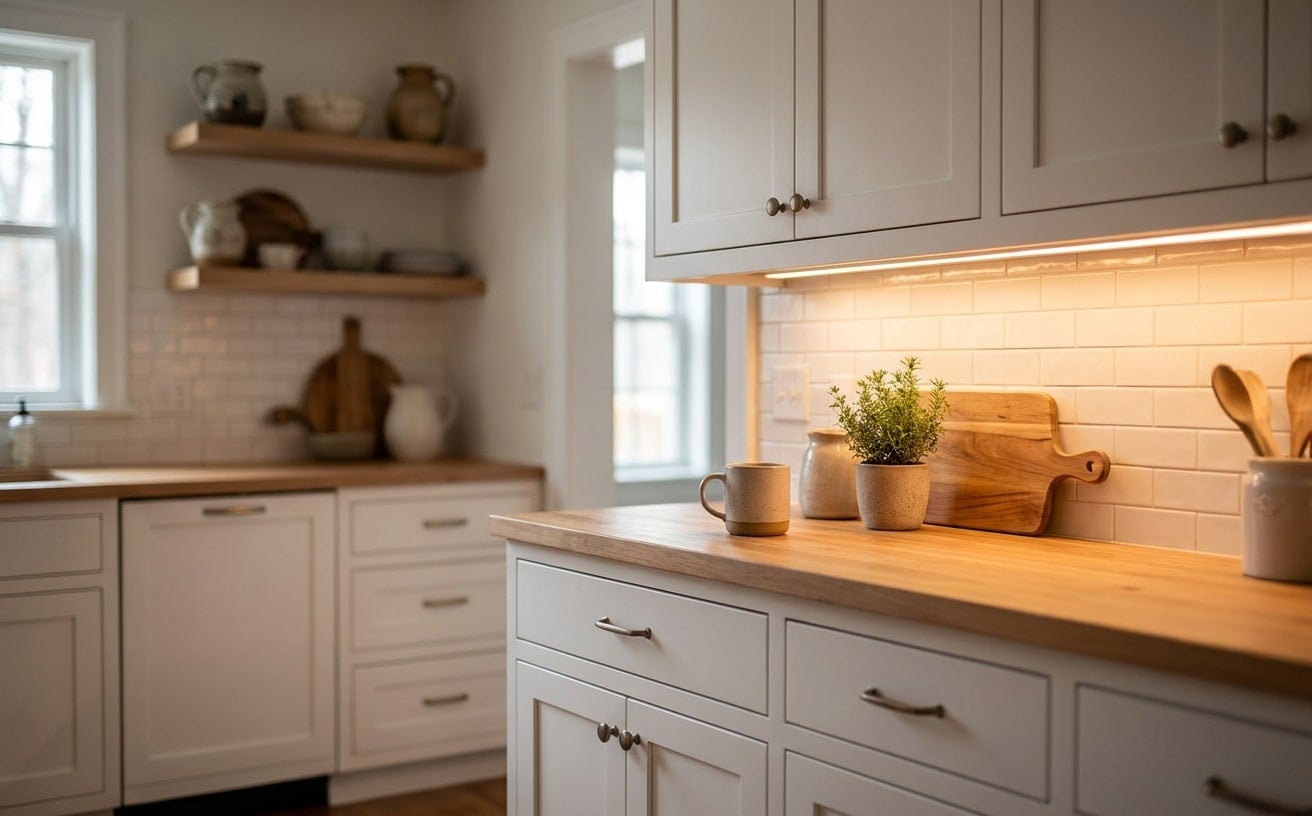
Linear bar lights (also called light bars or rigid strips) are longer, rectangular fixtures that offer a more even light distribution than puck lights. They often come in various lengths (e.g., 6 inches, 12 inches, 24 inches) and can be linked together to create continuous runs.
- Coverage: The goal with linear bar lights is usually to cover as much of the cabinet’s underside as possible. You’ll want the light bar to span at least two-thirds to three-quarters of the cabinet’s width. For a 30-inch wide cabinet, a 24-inch light bar is a good fit.
- Connecting: Many systems allow you to connect multiple bars with short jumper cables, minimizing dark spots between cabinets. This is ideal for achieving truly continuous under cabinet lights.
- Mounting: Mount these as far forward as possible, while still being hidden by the cabinet’s front lip, to get the best light spread across your counter.
LED Tape/Strip Lights: Continuous Glow
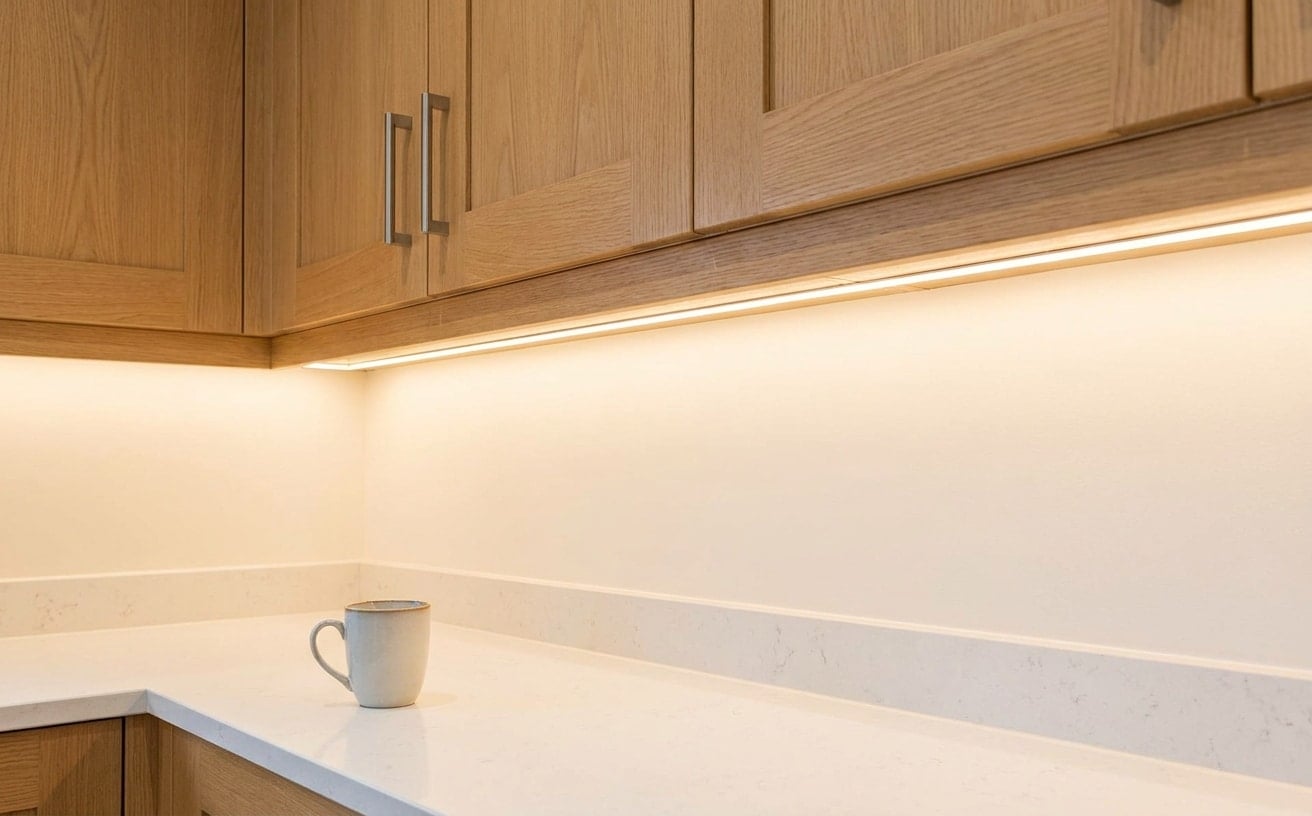
LED tape or strip lights are incredibly popular for under cabinet lighting because they offer the most continuous, uniform light output. They’re flexible, can be cut to length, and come in various brightness levels.
- Measuring Length: Simply measure the exact linear length of the cabinet runs you want to illuminate. Tape lights are designed to be cut at specific intervals, so you can custom-fit them to almost any length.
- Brightness: For kitchen task lighting, look for LED tape with at least 300-400 lumens per foot. Anything less might feel more like accent lighting than true task illumination.
- Placement: Mount LED tape lights closer to the front edge of the cabinet, but still hidden, for the best counter coverage. If you mount them too far back, you’ll illuminate the backsplash more than the counter.
- Diffusers: Many tape light installations benefit from an aluminum channel with a frosted diffuser. This helps to soften the light, eliminate visible “dots” from individual LEDs, and provide a more polished look.
Expert Tip: To figure out optimal placement, temporarily tape a light bar or strip to your cabinet underside with painter’s tape. Turn it on and stand normally. Move it slightly forward or back until you get the best light spread on your counter with minimal glare into your eyes. It makes a big difference.
Installation Considerations for Under Cabinet Lights
Once you’ve decided on the type and how many under cabinet lights you need, you’ll need to think about installation. There are two main ways to power these lights: plug-in or hardwired.
Plug-in systems are the easiest for DIYers. They simply plug into an existing wall outlet. This is a great choice if you have outlets readily available inside or near your cabinets. You’ll need to manage the cords, often with clips or channels, to keep them tidy and out of sight.
Hardwired systems connect directly to your home’s electrical wiring, usually to a switch on the wall. This provides a cleaner, more integrated look without visible cords or plugs. If you’re shopping for hardwired under cabinet lights, our kitchen lighting collection has a range of options at different price points. However, installing hardwired lighting involves working with household electricity. For anything involving new wiring or connecting directly to your home’s electrical system, I’d strongly recommend hiring a licensed electrician in your area. It’s worth every penny for peace of mind and to ensure the job is done safely and to code.
Other considerations include:
- Dimming: Do you want the ability to dim your under cabinet lights? Most LED systems are dimmable, but you’ll need compatible dimmers and drivers. Always check the product specifications.
- Color Temperature: This refers to the “warmth” or “coolness” of the light. For kitchens, many people prefer a neutral white (3000K-4000K) that mimics natural daylight, as it renders food colors accurately. Warmer light (2700K) is cozier, while cooler light (5000K+) can feel stark.
- Hiding the Fixture: No matter which type of under cabinet lights you choose, the goal is for the light to be seen, not the fixture itself. Ensure your cabinets have enough of a bottom lip or recess to hide the lights from view when you’re standing in your kitchen. If not, consider adding a thin piece of trim to create a light valance.
Common Mistakes to Avoid When Planning Under Cabinet Lights
I’ve seen this mistake a lot: people invest in under cabinet lights only to be disappointed because they didn’t quite get the effect they wanted. Here are some common pitfalls to sidestep:
- Not Enough Light (or Too Much): The biggest mistake is either underestimating the amount of light needed, leading to dim, ineffective task lighting, or overdoing it with fixtures that are too bright, creating harsh glare. Follow the lumen recommendations for different fixture types.
- Ignoring the Cabinet Lip: If your under cabinet lights are visible when you’re standing in the kitchen, it’s a major visual distraction. Always account for your cabinet’s bottom lip (or lack thereof) to ensure the fixture itself is hidden.
- Wrong Color Temperature: Mixing cool and warm light sources in the same room can make the space feel disjointed. Try to match the color temperature of your under cabinet lights to your other kitchen lighting (like your recessed cans or pendants).
- Poor Placement: Mounting lights too far back against the wall will primarily illuminate your backsplash, leaving your counter in shadow. Mounting them too far forward without a proper valance will cause glare. Experiment with placement if possible.
- Forgetting Dimming: Kitchens are multi-functional spaces. You’ll want bright light for cooking, but a softer glow for entertaining or late-night snacks. Dimmable under cabinet lights offer this versatility.
Frequently Asked Questions
How bright should under cabinet lights be?
For effective kitchen task lighting, you’ll generally want a combined output of at least 300-400 lumens per linear foot of cabinet. This ensures enough light to brighten your workspace without being overwhelming.
Can I mix and match different types of under cabinet lights?
While it’s possible, it’s usually best to stick to one type of under cabinet light (puck, bar, or tape) for a cohesive look and consistent light output. Mixing them can sometimes create an uneven lighting effect.
What’s the best color temperature for kitchen under cabinet lights?
Many homeowners prefer a neutral white light, typically between 3000K and 4000K, for kitchen task lighting. This range mimics natural daylight, making food colors appear true and providing clear visibility for tasks.
Are wireless under cabinet lights any good?
Wireless, battery-operated under cabinet lights can be a great, easy solution for small areas or renters. However, they’re generally not bright enough for primary task lighting and require frequent battery changes, making them less ideal for daily, heavy use in a busy kitchen.
Do I need a diffuser for under cabinet lights?
For LED tape lights, a diffuser is highly recommended. It softens the light, eliminates the distracting “dot” effect of individual LEDs, and helps distribute the light more evenly across your countertop for a polished look.
Getting the right number and type of under cabinet lights makes a huge difference in how you experience your kitchen. By taking careful measurements, considering your cabinet style, and choosing the right fixtures, you’ll create a kitchen that’s not only beautiful but also incredibly functional. Explore our full range of under cabinet lighting options to find the perfect solution for your home.