You’ve picked out the perfect light fixture, but now what? Hanging it at just the right spot can feel like a tricky puzzle. It’s not just about getting it up there; it’s about making sure it looks right, functions well, and doesn’t get in anyone’s way. Getting the lighting fixture height wrong is a common mistake that can throw off the whole feel of a room, making a space feel cramped or cavernous. We’re going to break down exactly how high to hang lighting fixtures in different rooms so you can avoid those awkward moments and create a beautifully lit home.
Understanding the Basics of Lighting Fixture Height
Before we dive into specific rooms, let’s talk about why lighting fixture height matters so much. A fixture hung too low can block views, feel intrusive, or even cause head bumps. Too high, and it might lose its visual impact, fail to illuminate properly, or just look disconnected from the furniture below it. It’s a balance of aesthetics and practicality. In my experience, the number one error is hanging a fixture too high, especially in entryways, because people overestimate the need for clearance.
Getting this right isn’t just about looking good, though. It’s about comfort. You don’t want a dazzling light in your eyes when you’re trying to relax or eat. We’ll be talking a lot about specific measurements, but remember these are guidelines. Your home’s unique dimensions and your personal preferences always play a role.
The Importance of Clearance and Sightlines
When deciding on lighting fixture height, think about the path people will take in the room. Will someone walk directly under this light? If so, you’ll need ample head clearance. For areas where people are typically seated, like over a dining table, the rules change because you’re considering the view across the table, not under the fixture. Always consider the tallest person in your household when thinking about walking paths.
Expert Tip: Before you commit to drilling, use painter’s tape or even a balloon to mark out the bottom of your fixture at different heights. Stand back, walk around, and even sit down. This simple trick can save you a lot of hassle and give you a much better feel for the space.
When to Call a Pro
While we’re discussing measurements, it’s important to mention safety. If you’re dealing with new wiring, moving an electrical box, or installing a very heavy fixture (think large chandeliers), I strongly recommend hiring a licensed electrician. It’s worth every penny for peace of mind, knowing it’s installed safely and correctly. They can also help with dimmer switches, which are a game-changer for controlling mood.
Dining Room Chandeliers: The Perfect Lighting Fixture Height
The dining room chandelier is often the centerpiece of the space, and its height is critical for both function and aesthetics. You want it to illuminate the table beautifully without blinding anyone or obstructing conversation.
The general rule of thumb for lighting fixture height over a dining table is to hang the bottom of the fixture 30 to 36 inches above the tabletop. This measurement is for a standard 8-foot ceiling.
Here’s why that range works:
– 30 inches: This is usually best for smaller, more intimate tables or if you have a lower ceiling (around 7.5 to 8 feet). It brings the light closer to the food and faces.
– 36 inches: This works well for larger dining tables or if you have a slightly higher ceiling (8.5 to 9 feet). It allows for better sightlines across the table and a more open feel.
If you have a ceiling higher than 8 feet, you’ll want to adjust this rule. For every foot of ceiling height above 8 feet, add 3 inches to your hanging height. So, for a 9-foot ceiling, you might hang the fixture 33 to 39 inches above the table. For a 10-foot ceiling, 36 to 42 inches.
| Pros of Lower Chandelier Height | Cons of Lower Chandelier Height |
|---|---|
| More intimate atmosphere | Can block sightlines for tall people |
| Better task lighting for dining | May feel visually heavy in small rooms |
| Emphasizes the dining table | Risk of head bumps if not careful |
Always consider the overall size of your dining room and the chandelier itself. A very large, visually heavy chandelier might feel better a bit higher, even within the recommended range, to avoid overwhelming the space. If you’re shopping for a beautiful focal point for your dining area, our chandelier collection has a range of options at different price points.

Kitchen Island Pendants: Functional and Stylish Placement
Kitchen island pendants are fantastic for both task lighting and adding a decorative touch. Their lighting fixture height is crucial for good illumination and avoiding glare.
The standard recommendation is to hang the bottom of the pendant 30 to 36 inches above the countertop. This measurement generally applies to standard 8-foot ceilings.
Consider these factors:
– Countertop use: If you do a lot of prep work or have people sitting at the island, you’ll want sufficient light without shadows or glare.
– Sightlines: Make sure the pendants don’t obstruct views if you’re trying to talk to someone across the island or look into an adjacent living area.
– Ceiling height: Like with dining room fixtures, if you have higher ceilings, you might raise the pendants a bit. For a 9-foot ceiling, you might go 33 to 39 inches above the counter.
– Pendant size: Smaller, more delicate pendants can sometimes be hung a little lower, while larger, more substantial ones might need to be a bit higher to maintain balance.
For spacing, a good rule is to place pendants 24 to 30 inches apart, measuring from the center of one fixture to the center of the next. You’ll also want them to be roughly 6 inches in from the edge of the island on either side, ensuring they’re centered visually over the usable space. If you have two pendants over a 6-foot island, for example, you’d likely center them with about 30 inches between them.
Entryways and Foyers: Making a Grand First Impression
The entryway fixture sets the tone for your home. You’ve got to balance visual impact with clear passage. The main goal here is head clearance.
For an entryway, you’ll want the bottom of the fixture to be at least 7 feet (84 inches) from the floor. This is the minimum height to ensure most people won’t hit their head.
If you have a two-story foyer, you have more flexibility. The general rule for lighting fixture height in a two-story space is to hang the fixture so its bottom is roughly level with the second-story floor or just slightly above it. This allows it to be seen and appreciated from both levels without looking lost or too high.
Here are some additional tips for foyers:
– Door clearance: Make sure the fixture won’t interfere with opening the front door.
– Visual weight: A larger, more dramatic fixture can be hung a bit higher in a grand foyer to maintain scale.
– Ceiling height: For very high ceilings (10 feet or more), don’t be afraid to choose a larger fixture and let it hang a little lower than the 7-foot minimum, as long as it’s not obstructing a doorway or walking path. You’ll want it to fill the vertical space.
Bedrooms: Creating a Cozy Retreat with the Right Light
Bedrooms are all about comfort and relaxation, so the lighting fixture height needs to support that.
Ceiling Fixtures (Chandeliers, Flush Mounts)
For a central ceiling fixture in a bedroom, you’ll still want to aim for a minimum of 7 feet (84 inches) of clearance from the floor if it’s over a walking path. If the fixture is positioned directly over the bed, where no one will stand directly beneath it, you have a bit more freedom. In this case, you can often hang the bottom of the fixture at least 6 feet (72 inches) from the floor, or even lower, as long as it doesn’t feel oppressive when you’re in bed. The goal is to avoid feeling like it’s going to hit you.
Bedside Pendants
Bedside pendants are a stylish alternative to table lamps. To get the lighting fixture height right for reading and ambiance:
– Hang the bottom of the pendant roughly 12 to 20 inches above your nightstand surface.
– The exact height depends on your bed and nightstand heights, and whether you prefer a focused reading light or more general ambient light.
– Test it out by sitting up in bed and making sure the light isn’t directly in your eyes.
Wall Sconces
When placing wall sconces in a bedroom, especially next to the bed or vanity:
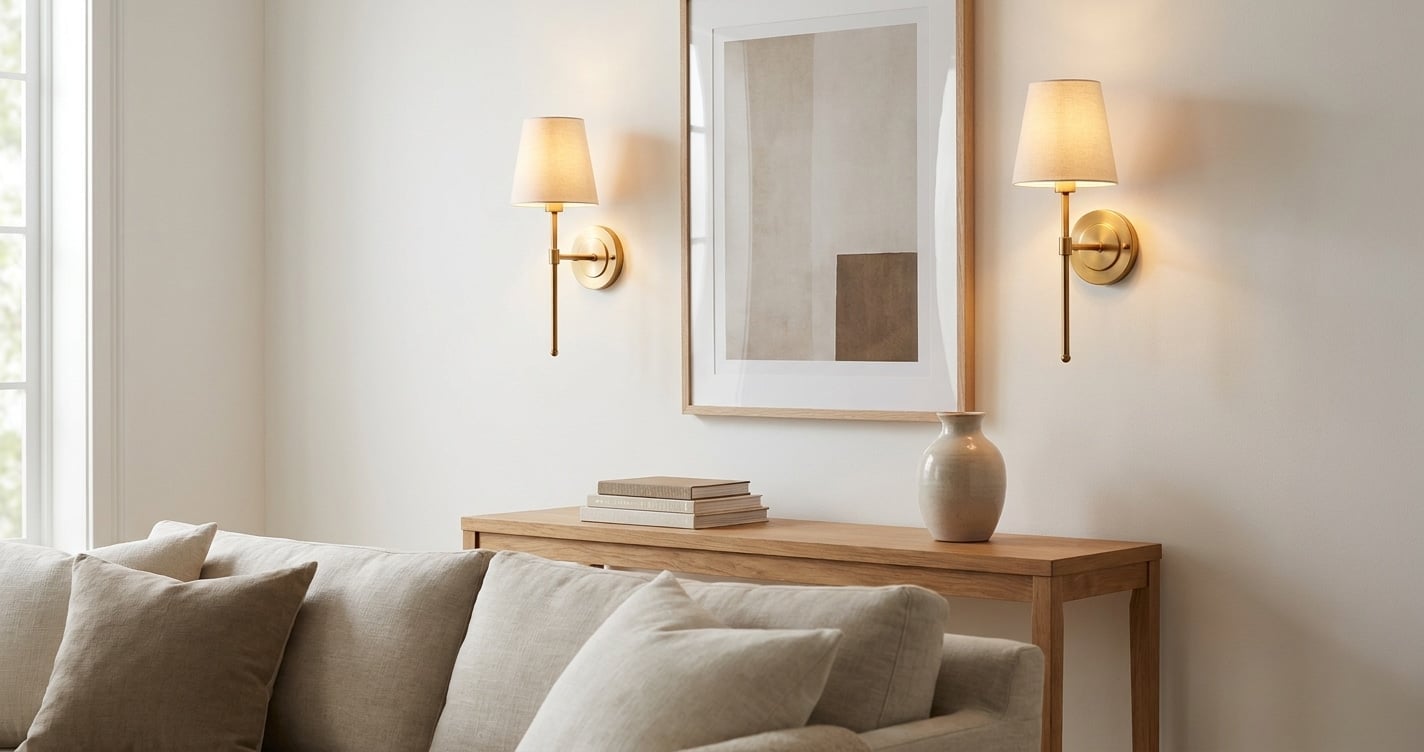
– A common height is to center the sconce at roughly 60 to 65 inches from the floor. This places it roughly at eye level for an average person, creating soft ambient light.
– If it’s for reading in bed, adjust the height so the light source is just above your shoulder when seated.
Bathroom Vanity Lighting: Illuminating Your Routine
Good lighting in the bathroom is essential for daily tasks like shaving or applying makeup. The right lighting fixture height can make all the difference, preventing harsh shadows.

Sconces on Either Side of the Mirror
This is often the best approach because it provides even, cross-illumination.
– Center the sconce at around 60 to 65 inches from the finished floor. This usually puts the light source near eye level, minimizing shadows.
– The space between the sconces should typically be 28 to 36 inches apart, depending on the mirror width and vanity size.
Fixture Above the Mirror
If you’re using a single fixture above the mirror:
– Hang it so the bottom edge is about 75 to 80 inches from the finished floor, or roughly 3 to 6 inches above the top of the mirror frame.
– The goal is to cast light evenly across your face, not just on the top of your head.
The primary keyword “how high to hang lighting fixtures” is really about getting that light just where you need it, and in the bathroom, that means no unflattering shadows.
General Rules for All Spaces: Mastering Lighting Fixture Height
While specific room recommendations are helpful, some universal principles apply when considering lighting fixture height.
The “Eye Test”
Step back and look at the fixture. Does it feel balanced in the room? Does it draw your eye to where it should? Sometimes, the specific measurements are just a starting point, and your own perception is the ultimate guide. Trust your gut feeling, but also get a second opinion.
Considering Overall Scale
The size of your fixture should always relate to the size of your room and the furniture it’s illuminating. A tiny pendant will get lost in a grand entryway, just as a massive chandelier will overwhelm a small dining nook. Once you have the right scale, the correct lighting fixture height helps it integrate seamlessly.
Adjusting for Ceiling Height
We’ve touched on this for specific rooms, but it’s worth reiterating:
– Standard 8-foot ceilings: Follow the basic guidelines.
– Higher ceilings (9+ feet): You’ll generally raise fixtures slightly, typically 3 inches higher for every extra foot of ceiling height. This helps the fixture fill the vertical space and maintain balance.
– Lower ceilings (under 8 feet): You might need to choose flush mounts or semi-flush mounts instead of hanging pendants or chandeliers. If you do hang a fixture, lean towards the higher end of the recommended ranges, or even a bit higher, ensuring maximum head clearance.
Remember, if you’re ever unsure about your electrical setup or handling heavy lighting, it’s always best to consult a professional electrician. They’re experts at making sure your beautiful new fixture is installed perfectly and safely.
Frequently Asked Questions
How do I know if my fixture is too high or too low?
If a fixture feels visually disconnected from the furniture below it, it’s likely too high. If it obstructs your view, makes you duck, or casts harsh shadows on your face, it’s probably too low. A good test is to consider how it functions in daily use; if it’s not comfortable, the lighting fixture height is probably off.
What if I have really high ceilings, like 12 feet?
For very high ceilings, you’ll need to increase the hanging length significantly. For a dining chandelier, instead of 30-36 inches above the table, you might be at 42-48 inches, or even more, to ensure the fixture doesn’t look tiny and lost in the vast vertical space. Don’t be afraid to use a longer chain or stem to bring the fixture down to a more appropriate level for the room’s human scale.
Can I hang a chandelier in a bedroom?
Absolutely! Chandeliers can add elegance to a bedroom. If hung over the bed, the bottom of the fixture can be as low as 72 inches from the floor, ensuring it doesn’t feel too close when you’re in bed. If it’s over a main walking path, stick to the 7-foot (84 inches) clearance rule for lighting fixture height.
Is there a general rule for hanging wall sconces?
Generally, you’ll want to center wall sconces at eye level, which is typically 60 to 65 inches from the finished floor. This height works well for hallways, living rooms, and bathrooms, providing ambient light without glare. Adjust based on the specific task or furniture placement.
Getting the lighting fixture height just right can transform a room, making it feel more cohesive and inviting. Don’t rush the decision. Take your time, measure twice, and visualize the fixture in place. When you’re ready to find that perfect piece, explore our collections to discover a world of lighting possibilities.