Stepping into a lighting showroom can feel a bit overwhelming, can’t it? There are so many beautiful options, and it’s tough to picture exactly how a single light fixture will transform your space. You’re probably wondering how to choose light fixtures that truly enhance each room, rather than just providing basic illumination. It’s a common dilemma, but with a little planning, you can make smart choices that bring warmth, style, and functionality to your entire home. Let’s break down how to pick the perfect light for every area, considering both aesthetics and practical needs.
Understanding the Basics of Choosing a Light Fixture
Before we dive into specific rooms, it’s helpful to grasp the fundamentals of good lighting. You’ll want to think about layering light, which essentially means combining different types of illumination to create a well-rounded and versatile space. This approach helps avoid harsh shadows and ensures you have the right light for any activity.
The Three Layers of Lighting
- Ambient Lighting: This is your room’s general illumination, the overall light that fills the space. Think ceiling fixtures like flush mounts, semi-flush mounts, or chandeliers. It’s the foundation of your room’s lighting scheme.
- Task Lighting: As the name suggests, this light helps you perform specific tasks. Under-cabinet lights in the kitchen, reading lamps by your favorite chair, or vanity lights in the bathroom are all examples. It’s usually brighter and more focused.
- Accent Lighting: This layer highlights specific features, like artwork, architectural details, or plants. Picture track lighting, picture lights, or wall sconces aimed at a focal point. It adds depth and drama.
Sizing Your New Light Fixture
One of the biggest mistakes I’ve seen homeowners make is choosing a light fixture that’s either too small or too large for the room. It just throws off the whole balance. Here’s a simple rule of thumb for ceiling fixtures in a room:
- Measure the room’s length and width in feet.
- Add those two numbers together.
- The result, in inches, is a good approximate diameter for your main ceiling fixture.
So, for a 10-foot by 12-foot room, you’d add 10 + 12 = 22. A light fixture about 22 inches in diameter would be a great starting point. For ceiling height, you generally want the bottom of a hanging fixture (like a chandelier) to be at least 7 feet off the floor in walking areas. Over a dining table, it can be lower, usually 30-36 inches above the tabletop.
Expert Tip: Don’t forget ceiling height. A long pendant in a room with an 8-foot ceiling will feel very different from the same pendant in a room with 10-foot ceilings. Always visualize or even mock up the height with a balloon to be sure.
Lumens, Kelvin, and Dimmers
You’ll also need to consider lumens (brightness) and Kelvin (color temperature). Don’t just look at watts anymore; lumens tell you how bright a bulb really is. For Kelvin, lower numbers (2700K-3000K) give you a warm, yellowish glow, great for living rooms and bedrooms. Higher numbers (3500K-4000K) are brighter and whiter, often preferred for kitchens or task areas. And please, install dimmers! They’re game-changers for creating ambiance and saving energy.
A quick safety note: For any new wiring, moving junction boxes, or installing a particularly heavy light fixture (anything over 10 pounds), I’d strongly recommend hiring a licensed electrician in your area. It’s worth every penny for peace of mind and to ensure everything is up to code.
Living Room: Creating a Welcoming Glow
Your living room is where you relax, entertain, and often spend a lot of time. It needs versatile lighting that can go from bright and social to cozy and intimate.
Key Light Fixture Choices for Living Rooms
- Ambient: A beautiful chandelier or a semi-flush mount ceiling light can serve as the main ambient source. If you have high ceilings, a larger pendant might work too. Remember that diameter rule we just discussed.
- Task/Accent: This is where floor lamps and table lamps truly shine. Place a floor lamp next to your reading chair. Add table lamps on end tables or console tables for softer pools of light and to create visual interest. Wall sconces can also add decorative accent lighting.
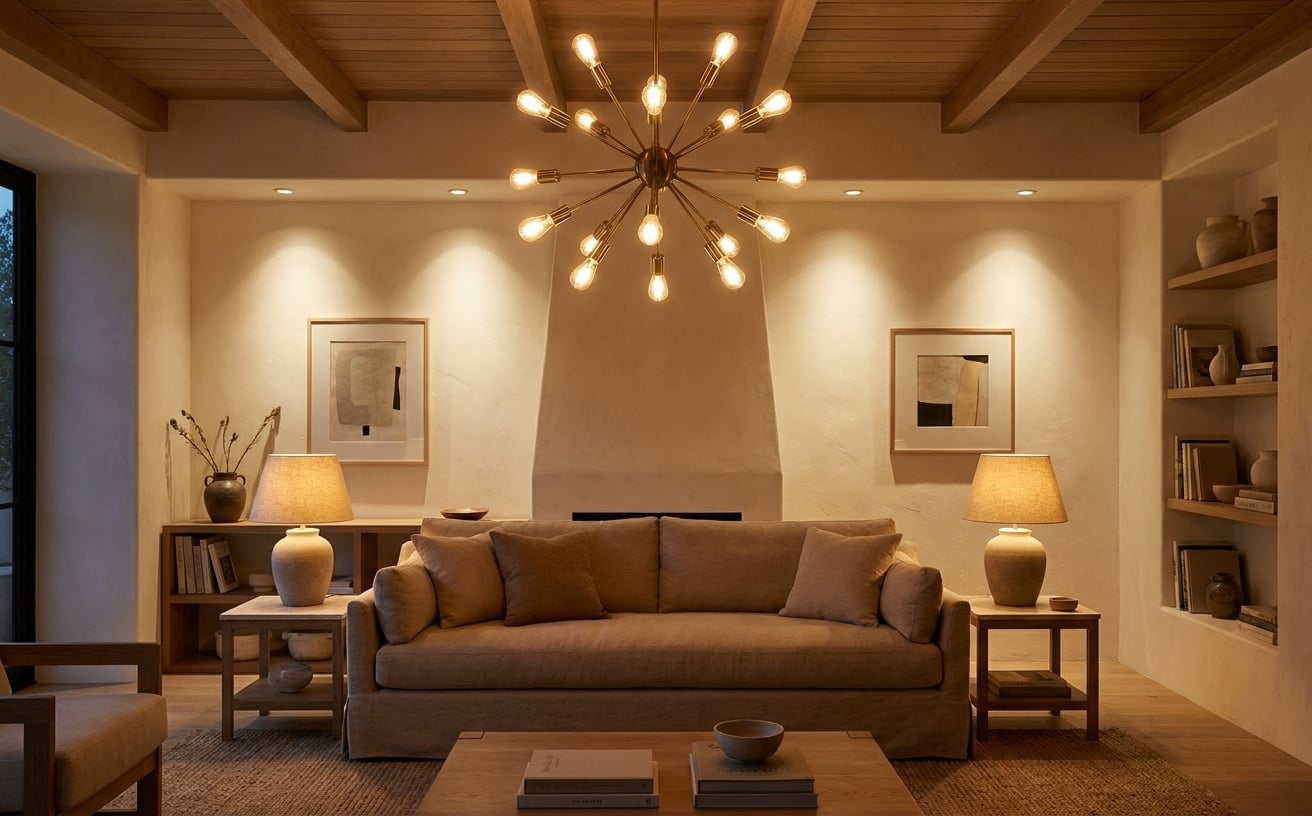
When choosing your main light fixture, consider the room’s style. A modern living room might benefit from a sleek, geometric chandelier, while a more traditional space could hold a classic crystal or brass design.
Dining Room: Setting the Scene for Meals
The dining room is all about gathering, food, and conversation. Your primary light fixture here usually hangs directly over the dining table, making a strong statement.
The Perfect Dining Room Light Fixture
- Chandelier or Pendants: This is typically your showstopper. For a rectangular table, you might choose one long linear chandelier or two to three smaller pendants lined up. For a round or square table, a single chandelier works beautifully.
- Sizing and Placement: The width of your chandelier should be about two-thirds the width of your dining table. As for height, the bottom of the fixture should hang roughly 30-36 inches above the table surface. This height prevents heads from bumping it but still illuminates the table well.
- Accent: Wall sconces on either side of a buffet or artwork can add a lovely layer of accent lighting without competing with the main fixture. Recessed lights around the perimeter of the room can also provide general ambient light when the chandelier is dimmed low.
| Pros of One Large Chandelier | Cons of One Large Chandelier |
|---|---|
| Makes a strong design statement | Can feel overwhelming in a small space |
| Easier to install than multiple pendants | Less flexible for table repositioning |
| Often provides ample light coverage | If too large, can block views across table |
Kitchen: Function Meets Style
The kitchen is a workspace first and foremost, so functional lighting is crucial. But it’s also a hub for family and entertaining, so style definitely matters. This is where layering really comes into play.
Essential Kitchen Light Fixture Combinations
- Ambient: Recessed can lights are popular for general overhead illumination because they’re discreet and provide even light. Flush or semi-flush mounts can also work, especially in smaller kitchens.
- Task: This is non-negotiable. Under-cabinet lighting is vital for illuminating countertops where you’re prepping food. Pendants over an island or peninsula are perfect for task lighting in that specific area. Make sure they’re bright enough!
- Accent: If you have open shelving or a beautiful backsplash, tape lighting or small spotlights can highlight these features.
When choosing island pendants, consider their size and the island’s length. For a 6-foot island, two pendants might be perfect. For a 9-foot island, three could be better. Space them about 24-30 inches apart, and hang them so the bottom is about 30-36 inches above the countertop.
If you’re shopping for new kitchen lighting, our lighting collection has a range of options at different price points, from sleek contemporary pendants to classic flush mounts.
Bedroom: Your Personal Retreat
Your bedroom is a sanctuary, so the lighting should be soft, inviting, and highly controllable. Bright, harsh overhead lights are generally a no-go here.
Crafting a Calm Bedroom with Light Fixtures
- Ambient: A decorative ceiling light fixture, perhaps a semi-flush mount or a small chandelier, can provide general light. But it shouldn’t be the primary source for everyday use.
- Task/Accent: Bedside lamps (table lamps or wall-mounted sconces) are essential for reading. Choose ones with shades that diffuse light warmly. A floor lamp in a corner can add a soft glow. Dimmers on all light sources are incredibly important here to set the mood.
- Avoiding Glare: In my experience, the number one error in bedrooms is having an exposed bulb in a central overhead light fixture that shines directly into your eyes when you’re lying in bed. Always opt for fixtures with diffused light or shades.
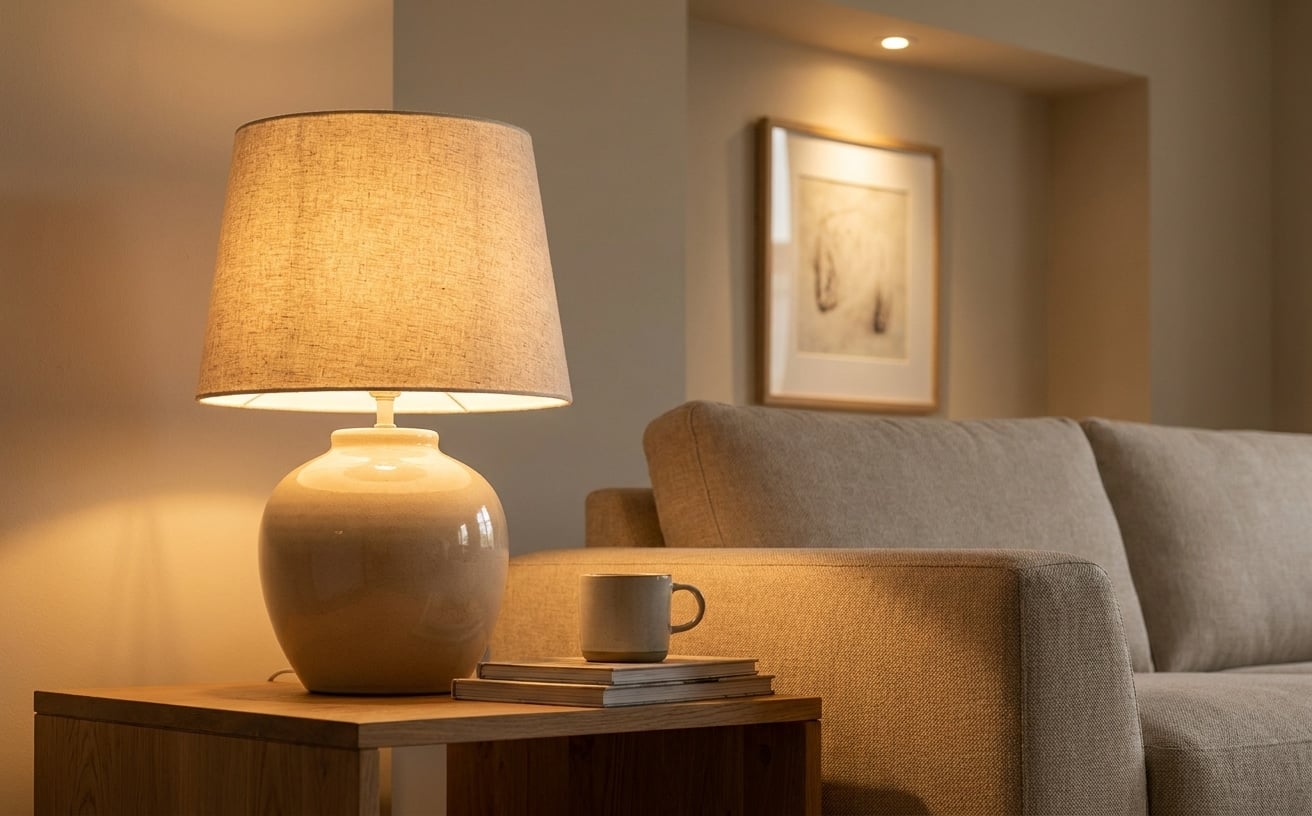
Consider the scale of your bedside lamps to your nightstands and bed. They shouldn’t be dwarfed by a large bed or overpower a tiny nightstand.
Bathroom: Bright and Beautiful
Bathroom lighting needs to be practical for grooming tasks, but it also contributes to the room’s overall feel. You’ll need good, even light at the mirror.
The Right Light Fixture for Your Bathroom Vanity
- Vanity Lighting: The best approach is often sconces mounted on either side of the mirror at eye level. This provides even, shadow-free illumination on your face. If side sconces aren’t possible, a horizontal bar light mounted above the mirror is the next best option. Make sure it’s long enough to cover most of the mirror’s width.
- Ambient: Recessed lights are great for general bathroom illumination. A flush mount in the center of the ceiling also works well.
- Shower Lighting: Don’t forget a wet-rated recessed light inside the shower enclosure. This prevents it from feeling like a cave.
- IP Rating: Always check the IP (Ingress Protection) rating for bathroom light fixtures. Fixtures near showers or bathtubs need to be rated for damp or wet locations to ensure safety and longevity.
When choosing how to choose light fixtures for your bathroom, think about the finish matching your other hardware, like faucets and cabinet pulls, for a cohesive look.
Entryway and Hallways: First Impressions
These spaces might not get as much attention as a living room, but they’re crucial for setting the tone for your home and for practical navigation.
Making an Entrance with a Light Fixture
- Entryway: This is your chance for a statement. If you have high ceilings, a chandelier or a grand pendant can create a dramatic first impression. For lower ceilings, a beautiful semi-flush mount light fixture is a better choice. Make sure it’s scaled appropriately for the size of your foyer.
- Hallways: Long hallways benefit from a series of flush mounts or semi-flush mounts spaced evenly. Generally, space them about 6-8 feet apart, depending on the ceiling height and desired brightness. If the hallway is wide, you might even consider wall sconces for added interest and ambient light.
Remember, the goal is to make these transitional spaces feel welcoming and safe to navigate, not just functional.
Frequently Asked Questions
How do I know what size light fixture I need for a room?
A good rule of thumb for a ceiling light fixture is to add the room’s length and width (in feet) and use that sum as the diameter (in inches) for your fixture. For example, a 10’x12′ room needs about a 22″ diameter light.
What’s the difference between lumens and watts?
Watts measure how much energy a bulb uses, while lumens measure how bright the bulb actually is. When buying new bulbs, focus on the lumen output to get the brightness you want, and then choose the wattage for energy efficiency.
Should all the light fixtures in my house match?
Not necessarily! While it’s great to have a cohesive style, you don’t need every light fixture to be identical. Instead, aim for a consistent aesthetic or finish palette that flows from room to room. You might use black fixtures in one area and brushed brass in another, but ensure they complement each other.
Can I put a dimmer on any light fixture?
Most modern light fixtures and LED bulbs are dimmable, but you should always check the product specifications. Some older fixtures or specific bulb types aren’t compatible with dimmers and can flicker or be damaged if you try to dim them. Make sure you’re using a dimmer switch designed for the type of bulb (e.g., LED compatible).
Choosing the right light fixture for each room truly makes a house feel like a home. With these tips, you’re well-equipped to make informed decisions that bring beauty and functionality to every corner. Feel free to explore our extensive collection and find the perfect pieces for your space.