Ever walked into a kitchen that just felt… off? Maybe it was too dim, casting strange shadows, or perhaps glaringly bright in all the wrong places. It’s frustrating, isn’t it? Good kitchen lighting isn’t just about turning on a switch; it’s about creating a functional, inviting, and beautiful space where you actually want to cook, gather, and live. Getting your kitchen lighting right is one of the most impactful upgrades you can make, and it’s a decision you won’t regret. This comprehensive kitchen lighting guide will walk you through everything you need to know to illuminate your culinary heart.
Why Your Kitchen Lighting Matters More Than You Think
Your kitchen isn’t just a place for preparing meals; it’s often the true hub of the home. It’s where kids do homework, where friends gather for coffee, and where countless memories are made. Because it serves so many purposes, your kitchen lighting needs to work hard. It’s got to provide bright, clear light for chopping vegetables, a warm glow for a casual dinner, and sometimes, just enough ambiance for a late-night snack. We’re aiming for both practicality and style here, because you shouldn’t have to choose between them.
The Four Layers of Kitchen Lighting
Think of kitchen lighting like dressing in layers. You wouldn’t wear just a t-shirt in winter, would you? Similarly, a single overhead fixture won’t cut it for your kitchen. A well-lit kitchen utilizes four distinct layers of light.
Ambient Lighting
This is your general, overall illumination, the foundation of your kitchen lighting scheme. It’s meant to light the entire room fairly evenly. Recessed lighting is a popular choice for ambient light, offering a clean look. For a standard 8-foot ceiling, you’ll often see 4-inch or 6-inch recessed cans, spaced about 4 to 6 feet apart, depending on the desired brightness and room size. Flush mount or semi-flush mount fixtures can also provide excellent ambient light, especially in smaller kitchens where you don’t want the visual clutter of multiple recessed lights. It’s important to make sure this layer provides enough general brightness.
Task Lighting
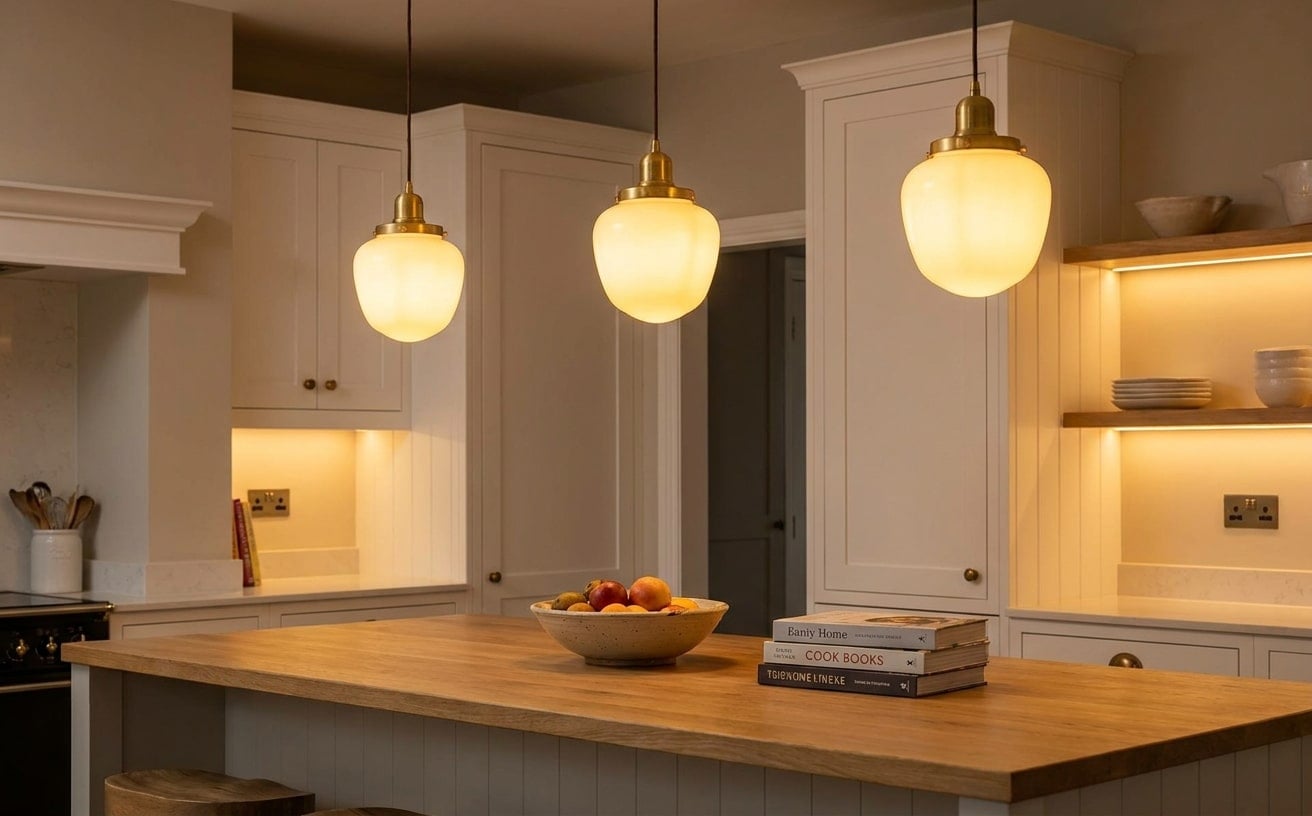
This is where your kitchen lighting truly shines for functionality. Task lighting focuses bright, direct light on specific work areas. The most common examples are under-cabinet lighting, which eliminates shadows cast by upper cabinets when you’re prepping food on countertops, and pendant lights hung over kitchen islands or peninsulas. For under-cabinet lighting, LED strips are fantastic; they’re energy-efficient, produce little heat, and provide continuous, even light. When hanging pendants over an island, you’ll typically want the bottom of the fixture to be about 30-36 inches above the countertop. If you’re dealing with a larger island, say 8 feet long, you might use two or three pendants, spaced roughly 2-3 feet apart on center.
Expert Tip: Don’t forget the importance of light temperature for under-cabinet lights. If your ambient light is a warm 3000K, make sure your under-cabinet lights match to avoid a jarring visual difference. Consistency makes a big impact.
Accent Lighting
Accent lighting adds drama and highlights specific features in your kitchen. It’s not about overall brightness, but about drawing attention. Think about lighting the inside of a glass-front cabinet to show off your dishware, or using small puck lights to illuminate decorative shelves. Toe-kick lighting, installed along the base of your cabinets, can also create a lovely, soft glow, especially at night. It’s a subtle touch, but it definitely elevates the space.
Decorative Lighting
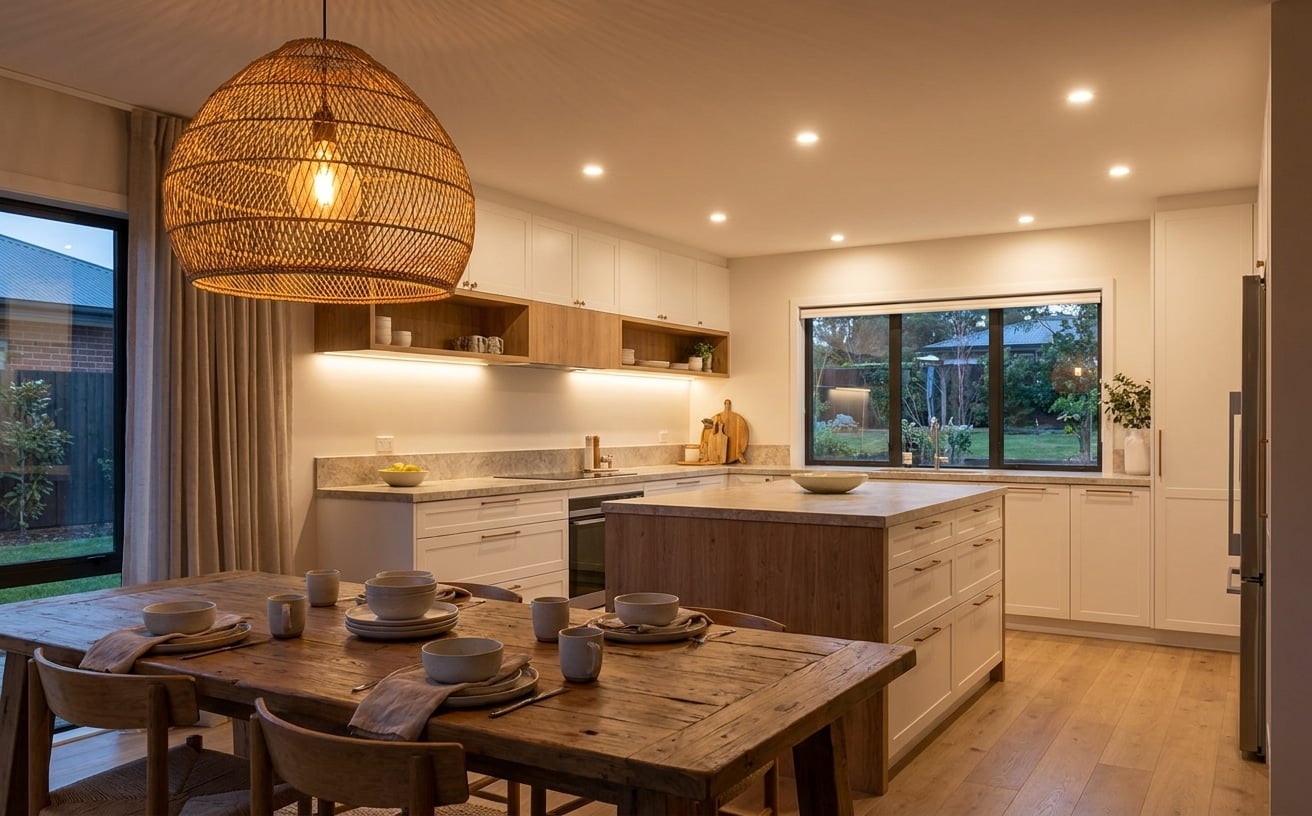
This layer is all about style and personality. Decorative lighting includes chandeliers, statement pendants, and unique wall sconces. While they also provide light, their primary role is aesthetic. A beautiful chandelier over a kitchen dining area or a striking oversized pendant above a large island can become the focal point of the room. If you’re shopping for chandeliers or statement pendants, our decorative lighting collection has a range of options at different price points. Just remember that while they look gorgeous, they shouldn’t be your sole source of illumination. They’re there to complement the other layers.
Choosing the Right Fixtures for Your Kitchen Layout
The size and shape of your kitchen will heavily influence your kitchen lighting choices. There’s no one-size-fits-all answer, but we can definitely guide you.
Small Kitchens
In a compact kitchen, you’ll want fixtures that don’t overwhelm the space. Recessed lighting is often ideal for ambient light because it’s built into the ceiling and doesn’t take up visual space. A single, well-chosen semi-flush mount or flush mount can also work beautifully. If you have a small peninsula or a compact prep area, a single pendant light might provide enough task lighting without cluttering the view. We’re aiming for efficient and streamlined.
Galley Kitchens
Galley kitchens are long and narrow, so linear lighting solutions work best. Track lighting, with adjustable heads, can provide both ambient and task lighting along the length of the kitchen. Multiple small flush mounts or a series of linear pendants can also create a sense of flow. It’s important to distribute the light evenly down the length of the space.
Open Concept Kitchens
With an open concept, your kitchen lighting needs to flow visually with adjacent living or dining areas. You’ll want to define the kitchen zone with its own lighting, but ensure the style and light temperatures complement the rest of the open space. Often, you’ll use a combination of recessed lighting for overall ambient light, with decorative pendants or a chandelier specifically over the island or dining table to create a distinct kitchen identity. Consistency in finishes and light quality is key here.
Kitchen Islands and Peninsulas: A Focus on Pendants
Pendants are a cornerstone of modern kitchen design, especially over islands and peninsulas. The choice between a single large pendant and multiple smaller ones is a common dilemma. Here’s a quick look at the trade-offs:
| Pros | Cons |
|---|---|
| Single Large Pendant | Can be visually impactful |
| Creates a strong focal point | Might not distribute light as evenly as multiple pendants |
| Simpler installation | |
| Multiple Smaller Pendants | Excellent light distribution |
| Offers a sense of rhythm and repetition | Can look cluttered if too many are used |
| Can be adjusted for precise task lighting |
For an island, make sure your pendants are proportional to the island’s length and width. A good rule of thumb is that the pendant (or combined width of multiple pendants) should be about one-half to two-thirds the length of the island. Remember, for any new wiring or hanging particularly heavy fixtures like a large pendant or chandelier, I’d strongly recommend hiring a licensed electrician in your area. It’s worth every penny for peace of mind and safety.
Understanding Light Temperature and Brightness
Beyond the type of fixture, you’ll also need to consider the quality of the light itself. This means thinking about color temperature and brightness.
-
Color Temperature (Kelvin): This is measured in Kelvin (K) and describes how warm or cool the light appears.
- 2700K-3000K (Warm White): This light has a yellowish hue, similar to traditional incandescent bulbs. It’s cozy and inviting, great for dining areas, but might feel a bit too dim for task-heavy kitchen zones.
- 3000K-3500K (Soft White/Neutral White): This is a popular choice for kitchens. It’s still warm but provides good clarity for cooking and daily tasks without being harsh. Many homeowners find this a comfortable balance for their kitchen lighting.
- 4000K (Cool White/Bright White): This light has a more bluish-white appearance. It’s excellent for task lighting where you need crisp, clear visibility, like a butcher block or prep area. Some people find it too stark for an entire kitchen, so it’s often best used selectively.
-
Brightness (Lumens): This measures the total amount of visible light produced by a bulb. For general kitchen lighting, you’ll want a good amount of lumens. A common recommendation is around 30-50 lumens per square foot for ambient lighting, with task lighting needing even more direct lumens. Don’t confuse lumens with wattage; wattage measures energy consumption, not brightness.
And here’s a non-negotiable for kitchen lighting: dimmers. They’re an absolute must-have. Dimmers allow you to adjust the brightness of your lights to suit any mood or activity, transforming your kitchen from a brightly lit workspace to a softly glowing gathering spot in an instant. You’ll want separate dimmers for each layer of your kitchen lighting, if possible.
Common Kitchen Lighting Mistakes to Avoid
Even with the best intentions, it’s easy to make a few errors. In my experience, the number one error is relying on a single overhead light for everything. That’s just not going to give you the functionality or ambiance you need.
- Not Enough Layers: We’ve talked about this, but it bears repeating. Don’t skimp on ambient, task, accent, and decorative lighting. Each plays a vital role.
- Wrong Sized Fixtures: A tiny pendant over a massive island will look lost. A huge chandelier in a small breakfast nook will overwhelm the space. Always measure and visualize.
- Poor Placement: Hanging a pendant too high or too low, or placing recessed lights where they cast shadows on your work surfaces, defeats the purpose. Think about where you stand and work.
- Ignoring Dimmers: Seriously, put dimmers on everything. You won’t regret the flexibility they offer.
- Mismatched Light Temperatures: Mixing a 2700K warm white with a 4000K cool white in the same visual space can look jarring. Try to keep your primary kitchen lighting within a consistent temperature range. I’ve seen this mistake a lot, and it’s an easy fix during planning.
Planning Your Kitchen Lighting Project
A little planning goes a long way. Before you buy a single fixture, sketch out your kitchen layout. Mark where your countertops, island, sink, and stove are. Then, consider where you need each layer of light.
- Map out Ambient Light: Where do you need general overhead illumination?
- Identify Task Zones: Where do you chop, cook, or read recipes? These areas need focused light.
- Spot Accent Opportunities: Is there a beautiful backsplash or a display cabinet you want to highlight?
- Choose Decorative Elements: Where can you add a statement piece that enhances the overall design?
For anything involving new wiring, moving existing electrical boxes, or hanging heavy fixtures, you’ll need the expertise of a licensed electrician. They’ll ensure everything is up to code and safely installed.
Essential Steps for Your Kitchen Lighting Overhaul
- Measure Everything: Ceiling height, island length, distance from cabinets.
- Sketch Your Layout: Visualize where lights will go.
- Consider Light Temperature and Brightness: Plan for consistent, appropriate light quality.
- Plan for Dimmers: Decide which circuits need dimmable switches.
- Consult a Professional: For complex installations, always call a licensed electrician. Don’t try to DIY anything beyond simple fixture swaps if you’re not experienced.
Frequently Asked Questions
How many recessed lights do I need in my kitchen?
The number depends on your kitchen’s size and ceiling height. A good starting point is to space 4-inch or 6-inch recessed lights about 4 to 6 feet apart for ambient lighting. For an 8×10 foot kitchen, you might need 4-6 lights, while a larger 10×15 kitchen could use 6-9. Always aim for even distribution.
What’s the best height for pendant lights over an island?
Generally, the bottom of the pendant light should hang about 30-36 inches above the countertop. This height provides good task lighting without obstructing your view or bumping into heads. Adjust slightly based on your ceiling height and the size of the pendants.
Can I mix different metal finishes in my kitchen lighting?
Yes, you absolutely can! Mixing metals is a popular design trend. The key is to be intentional. Choose two or three finishes and repeat them throughout the kitchen. For example, you might have satin brass pendants with matte black cabinet hardware, and a stainless steel sink. It adds depth and interest without looking cluttered.
What color temperature is best for kitchen lighting?
Most homeowners find that 3000K-3500K (soft white to neutral white) is ideal for overall kitchen lighting. It’s warm enough to feel inviting but provides enough clarity for tasks. For specific task lighting, like under-cabinet lights, you might go slightly higher to 4000K for extra crispness, ensuring it blends well with your ambient light.
Crafting the perfect kitchen lighting scheme really transforms your home. It’s a space you’ll use every day, so investing in thoughtful illumination is truly worth it. Take your time, plan it out, and you’ll create a kitchen that’s not just functional, but beautifully lit.