Vaulted ceilings are a homeowner’s dream, aren’t they? They add so much drama and a sense of openness to a room. But when it comes to lighting them, they can quickly become a headache. You’ve got all that beautiful vertical space, but how do you light it effectively without making the room feel like a cavern or, worse, a brightly lit airport hangar? It’s a common challenge, and finding the best lighting for these unique spaces requires a bit of thoughtful planning. We’re looking for creative, functional, and beautiful best lighting for vaulted ceilings ideas that truly enhance your home.
Understanding the Vaulted Ceiling Challenge
The biggest issue with vaulted ceilings is usually height. Standard lighting fixtures designed for 8-foot ceilings just won’t cut it. They’ll either look tiny and lost, or they’ll be mounted so high that they don’t actually light anything useful. Plus, the sloped angles can create tricky shadows if you’re not careful. We’re not just trying to add light, we’re trying to add good light that defines the space and makes it feel welcoming. It’s about proportion and layering.
Chandeliers: The Grand Statement for High Ceilings
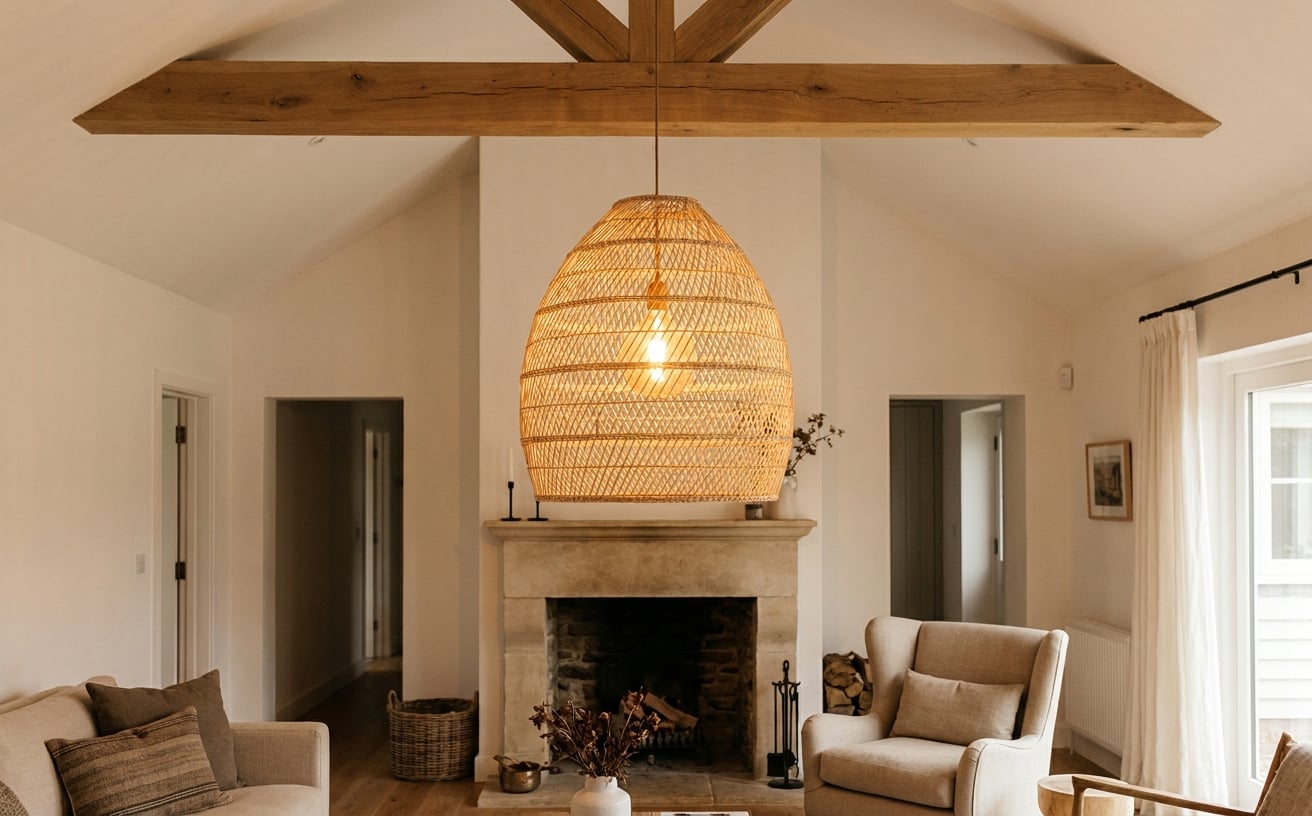
When you have a vaulted ceiling, you’ve got a fantastic opportunity to go bold with a chandelier. It’s often the focal point of the room, drawing the eye upward and emphasizing that wonderful height. But choosing the right size is crucial.
Sizing Your Vaulted Ceiling Chandelier
A common mistake I’ve seen a lot is choosing a chandelier that’s too small. For a vaulted ceiling, you generally want a larger fixture than you’d pick for a standard room.
- Diameter: A good rule of thumb for a room’s diameter is to add the room’s length and width (in feet), and that sum in inches gives you a good starting point for the chandelier’s diameter. For example, a 15′ x 20′ room (35 feet) would suggest a 35-inch diameter chandelier. With a vaulted ceiling, you can often go even larger, adding 6-12 inches to that calculation.
- Height/Drop: This is where vaulted ceilings get tricky. You want the bottom of the chandelier to be visible and provide light without being in the way.
- Over a dining table: The bottom of the fixture should be about 30-36 inches above the tabletop. This keeps it from blocking views but still illuminates the table well.
- In an open living space or entry: Aim for the bottom of the fixture to be at least 7-8 feet off the floor. If you have a particularly dramatic vault, you might even go a little higher, but make sure it still feels connected to the human scale of the room. Don’t be afraid to use a very long chain or stem.
| Pros | Cons |
|---|---|
| Makes a powerful design statement | Can be challenging to install |
| Excellent ambient light source | Harder to clean/re-bulb |
| Fills vertical space beautifully | Requires careful sizing to avoid looking lost |
For anything involving new wiring or a heavy chandelier, especially one that requires a very tall ladder or scaffolding, I’d strongly recommend hiring a licensed electrician in your area. It’s worth every penny for peace of mind and safety.
Pendants: Versatility and Visual Interest
Pendant lights aren’t just for kitchen islands anymore. They’re some of the best lighting for adding focused light and visual flair in vaulted spaces.
Clustering Pendants for Impact
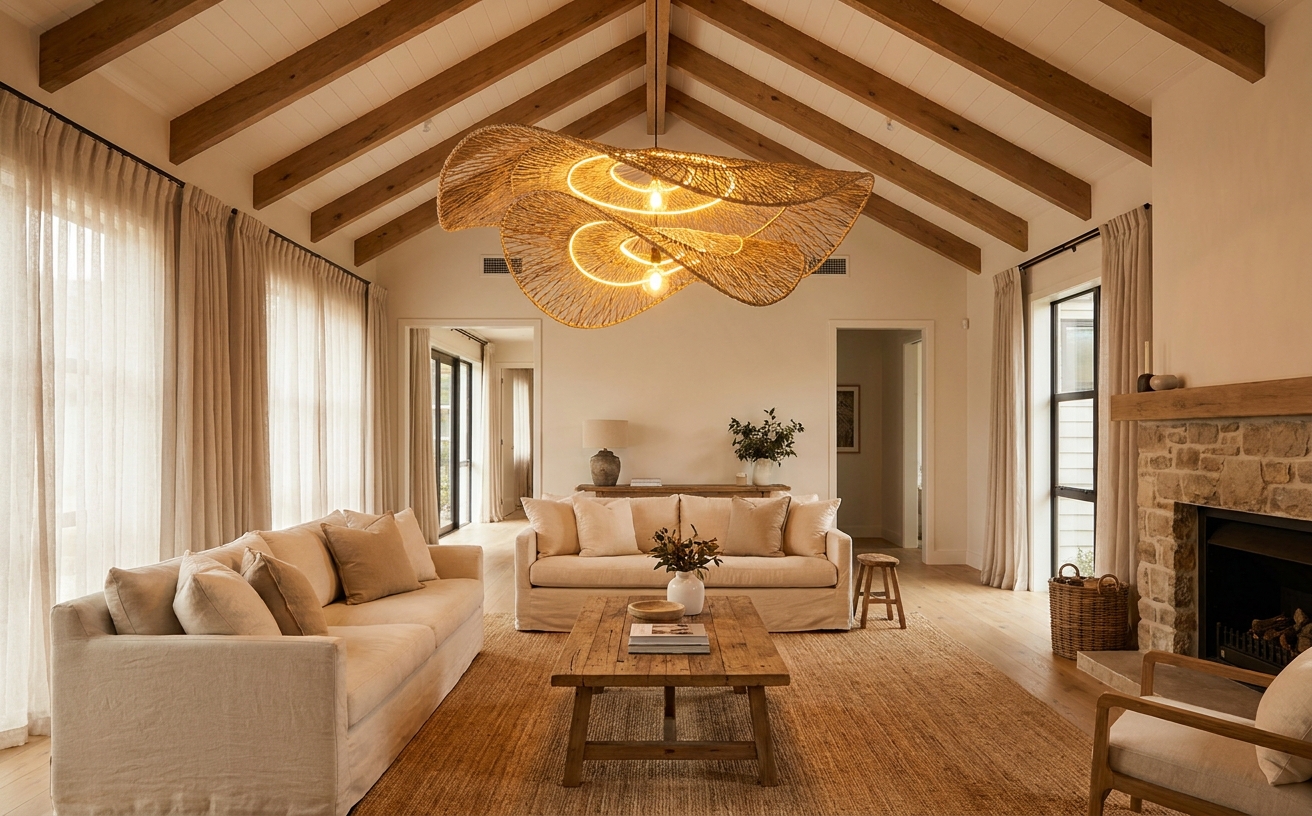
Instead of one large chandelier, you can create a stunning effect by clustering multiple pendants at varying heights. This works beautifully in an open stairwell, over a large dining table, or in a double-height foyer. You can mix and match shapes and sizes or use identical pendants for a more uniform look. It’s a modern way to fill that vertical volume without the formality of a traditional chandelier. If you’re shopping for lighting, our pendant collection has a range of options at different price points.
Linear Pendants for Elongated Spaces
For long dining tables or kitchen islands beneath a vaulted ceiling, a single linear pendant can be incredibly effective. These fixtures are designed to spread light evenly across a surface. They often have multiple light sources within one housing, providing ample task lighting. Again, pay attention to the drop height, ensuring it aligns with the 30-36 inches above a tabletop rule.
Recessed Lighting: The Essential Foundation
While decorative fixtures grab attention, recessed lighting is often the unsung hero, providing the essential ambient light that makes a room functional. For vaulted ceilings, it’s particularly important to get this right.
Strategic Placement for Even Illumination
You can’t just put recessed lights anywhere. The sloped angles of a vaulted ceiling mean you need to think about beam direction and placement.
- Adjustable “Eyeball” Trims: These are your best friend for vaulted ceilings. They allow you to direct the light beam precisely where you need it, down onto the living space, rather than just washing the ceiling slope.
- Spacing: A general guideline is to space recessed lights approximately 4-6 feet apart, depending on the ceiling height and the fixture’s lumen output. For higher ceilings, you’ll need wider spacing or more powerful lights to reach the floor effectively.
- Dimmers: Every single recessed light in a vaulted room should be on a dimmer. This gives you incredible flexibility to adjust the mood and intensity. It’s the best lighting for adapting to different activities, from bright task work to cozy evenings.
Expert Tip: For vaulted ceilings, consider using LED recessed lights with a wider beam spread (e.g., 60 degrees instead of 30 degrees) to ensure light reaches the floor more effectively from a high vantage point. This helps avoid a “spotlight” effect and provides better overall ambient illumination.
Track and Cable Lighting Systems: Modern Flexibility
If you have architectural features, artwork, or specific areas you want to highlight within your vaulted space, track lighting or cable systems offer incredible flexibility. These are some of the most versatile best lighting for vaulted ceilings ideas.
Track Lighting for Focused Illumination
Track lighting allows you to mount multiple light heads on a single track, and each head can be individually aimed. This is perfect for highlighting a stone fireplace, a gallery wall, or a specific seating area. You can even get track heads with different beam angles for varying effects. It’s a clean, modern look that doesn’t compete with the ceiling’s architecture.
Cable Lighting for Minimalist Aesthetics
Cable lighting uses thin, tensioned cables stretched across a room, with small, decorative fixtures suspended from them. It’s incredibly discreet and almost disappears against a high, light-colored ceiling. It’s excellent for ambient light or accenting, especially where you want minimal visual clutter.
Wall Sconces and Architectural Uplighting: Layering Light
Don’t forget the walls! While ceiling fixtures handle the main illumination, wall-mounted lights add crucial layers of light that can warm up a vast space.
Sconces for Ambient Glow
Wall sconces, placed at eye level (typically 60-66 inches from the floor), can provide a soft, ambient glow that makes a large room feel more intimate. They break up tall wall expanses and add decorative elements at a human scale. This is the best lighting for creating a sense of coziness in a grand space.
Uplighting to Emphasize Height
Consider discreet uplights placed on the floor or on furniture that shine light up onto the ceiling. This technique accentuates the height and architectural features of your vault, making the ceiling itself a beautiful, glowing surface. It adds depth and dimension that downward-facing lights can’t achieve alone.
Frequently Asked Questions
How high should I hang a chandelier in a room with a vaulted ceiling?
For a dining table, the bottom of the chandelier should be 30-36 inches above the tabletop. In an open living area or foyer, aim for the bottom of the fixture to be at least 7-8 feet from the floor, or higher if the ceiling is exceptionally tall, ensuring it still feels connected to the room below.
Can I use only recessed lights in a room with a vaulted ceiling?
You can, but it’s often not ideal. Recessed lights provide excellent ambient and task lighting, but they lack the decorative impact and warmth that a chandelier or pendant can offer. Combining recessed lighting with decorative fixtures creates a more balanced and inviting space.
What if my vaulted ceiling isn’t extremely high?
Even a moderately vaulted ceiling benefits from thoughtful lighting. Focus on fixtures that extend into the space without overwhelming it. Linear pendants, multi-pendant clusters, or a carefully sized chandelier can still work wonders. Adjustable recessed lights are still vital for directing light effectively.
Is it hard to change bulbs in high vaulted ceiling lights?
It can be. Many modern LED fixtures have very long lifespans, meaning bulb changes are infrequent. For traditional bulbs, you’ll likely need a tall ladder or a professional service. This is another reason to consider long-lasting LEDs from the start.
Should all the lights in a vaulted room be on dimmers?
Absolutely! Dimmers are essential for vaulted ceilings. They allow you to control the intensity of the light, adapting the room’s atmosphere for different times of day or activities. This flexibility is key to making a large space feel comfortable and functional.
Navigating the world of vaulted ceiling lighting doesn’t have to be overwhelming. With these creative lighting ideas, you’re well on your way to transforming your high-ceilinged room into a beautifully lit, inviting space. Feel free to explore our extensive collection of fixtures to find the perfect pieces for your unique ceiling.