Choosing the right light fixture for your dining room can feel a bit daunting, can’t it? It’s often the focal point of the entire space, setting the mood and defining the style. You want something beautiful, functional, and perfectly scaled for your room and table. But figuring out the exact dimensions, the ideal height, and the best style for your specific dining area isn’t always obvious. Getting your dining room chandelier right makes all the difference, and it’s definitely worth taking the time to plan properly so you’ll love the end result for years to come.
Understanding the Basics: How to Choose Dining Room Chandelier Size
The most common mistake I’ve seen homeowners make is choosing a chandelier that’s either too small or overwhelmingly large. It really throws off the whole room’s balance. When you’re trying to figure out how to choose dining room chandelier size, there are a couple of basic rules you can follow that really simplify things. These guidelines aren’t set in stone, but they’re an excellent starting point.
The Golden Rule for Dining Room Chandelier Diameter
A good rule of thumb for determining the ideal diameter of your dining room chandelier relates to the dimensions of your room itself. You’ll want to measure the length and width of your dining room in feet. Add those two numbers together, and that sum, in inches, is often a great target diameter for your chandelier. For example, if your dining room is 10 feet wide and 12 feet long, you’d add 10 + 12 to get 22. So, you’d be looking for a dining room chandelier with a diameter of roughly 22 inches. This method helps ensure the fixture feels proportionate to the overall space.
Sizing Your Dining Room Chandelier Based on Table Dimensions
While the room size rule is helpful, the most critical relationship is between your dining room chandelier and your dining table. After all, the chandelier hangs directly above it! A well-proportioned chandelier shouldn’t extend beyond the width of your table. In fact, it’s generally recommended that your dining room chandelier be about two-thirds to three-quarters the width of your dining table.
Let’s say your dining table is 42 inches wide. You’d aim for a chandelier diameter between 28 inches (42 x 0.66) and 31.5 inches (42 x 0.75). This ensures the light is centered over the table without feeling cramped or allowing people to bump their heads. It also allows plenty of room for place settings and decorations without being overwhelmed by the fixture. If you have an extendable table, consider the size of the table when fully extended, or choose a chandelier that works well in both configurations.
Hanging Height: Where Your Dining Room Chandelier Truly Shines
Once you’ve nailed down the size, the next crucial step is determining the correct hanging height for your dining room chandelier. This isn’t just about aesthetics; it’s about comfort and proper illumination. You don’t want a light fixture blocking views across the table, nor do you want it so high it feels disconnected.
For standard 8-foot ceilings, the bottom of your dining room chandelier should typically hang between 30 to 36 inches above the surface of your dining table. This height allows for clear sightlines, prevents people from bumping their heads when standing up, and provides optimal light distribution over the eating surface.
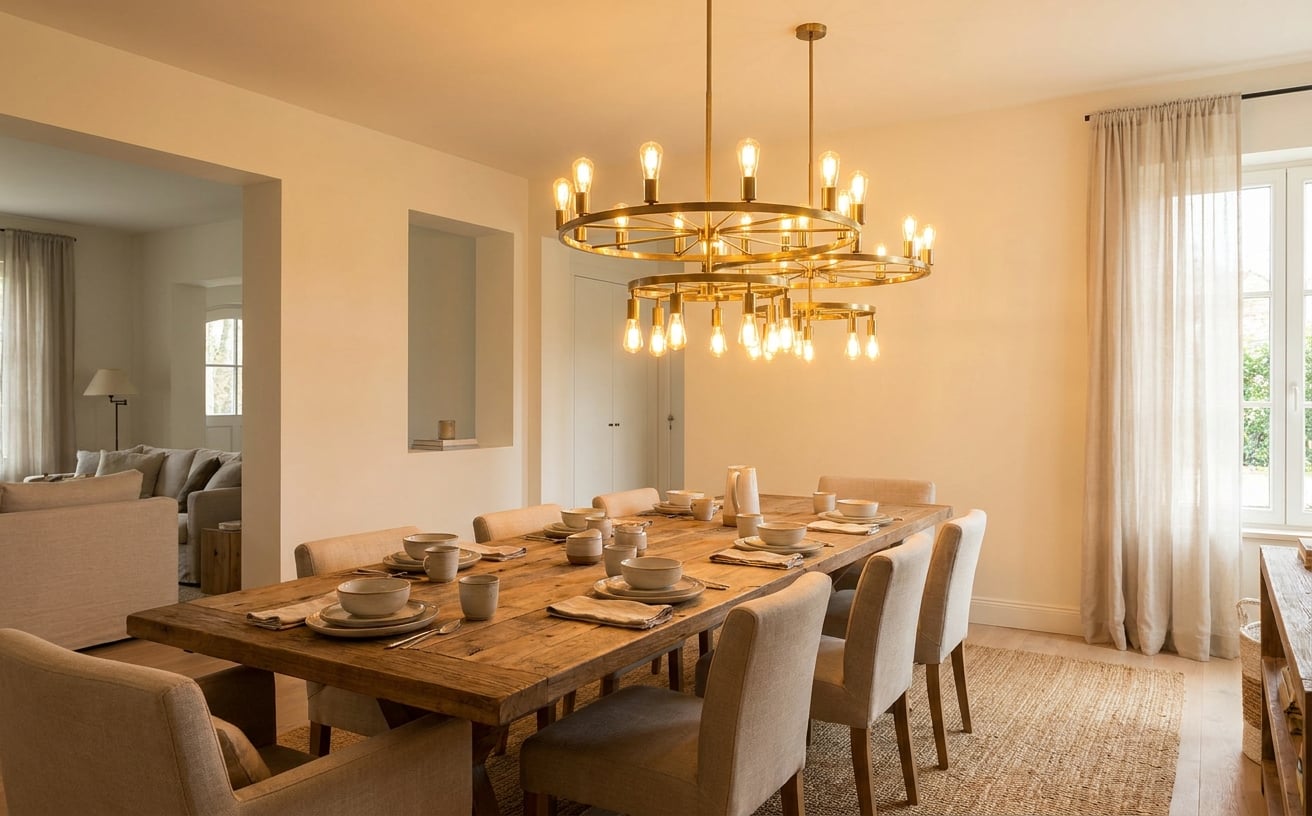
If your ceilings are taller than 8 feet, you’ll need to adjust that measurement. For every additional foot of ceiling height, you can add about 3 inches to the hanging height of the chandelier. So, for a 9-foot ceiling, you might aim for 33 to 39 inches above the table. For 10-foot ceilings, think 36 to 42 inches. It’s a small adjustment, but it makes a big difference in how the dining room chandelier feels in the space.
Expert Tip: Before you commit to cutting the chain or stem, use string or fishing line to temporarily hang the chandelier at different heights. Sit down at the table and look across to get a feel for what feels best and doesn’t obstruct views.
Style and Scale: Matching Your Dining Room Chandelier to Your Decor
Beyond mere measurements, the style of your dining room chandelier needs to harmonize with the overall aesthetic of your home. Are you going for a modern minimalist look, a rustic farmhouse vibe, or something more traditional and opulent? The chandelier should complement your existing furniture, wall colors, and decorative accents.
Think about the materials in your room. If you have a lot of polished chrome or brushed nickel in other fixtures, a chandelier with similar metallic finishes would tie everything together. Wood accents in your dining room furniture might call for a chandelier with wood elements or a bronze finish. Don’t be afraid to mix metals if you do it intentionally, but for most homeowners, consistency creates a more cohesive feel.
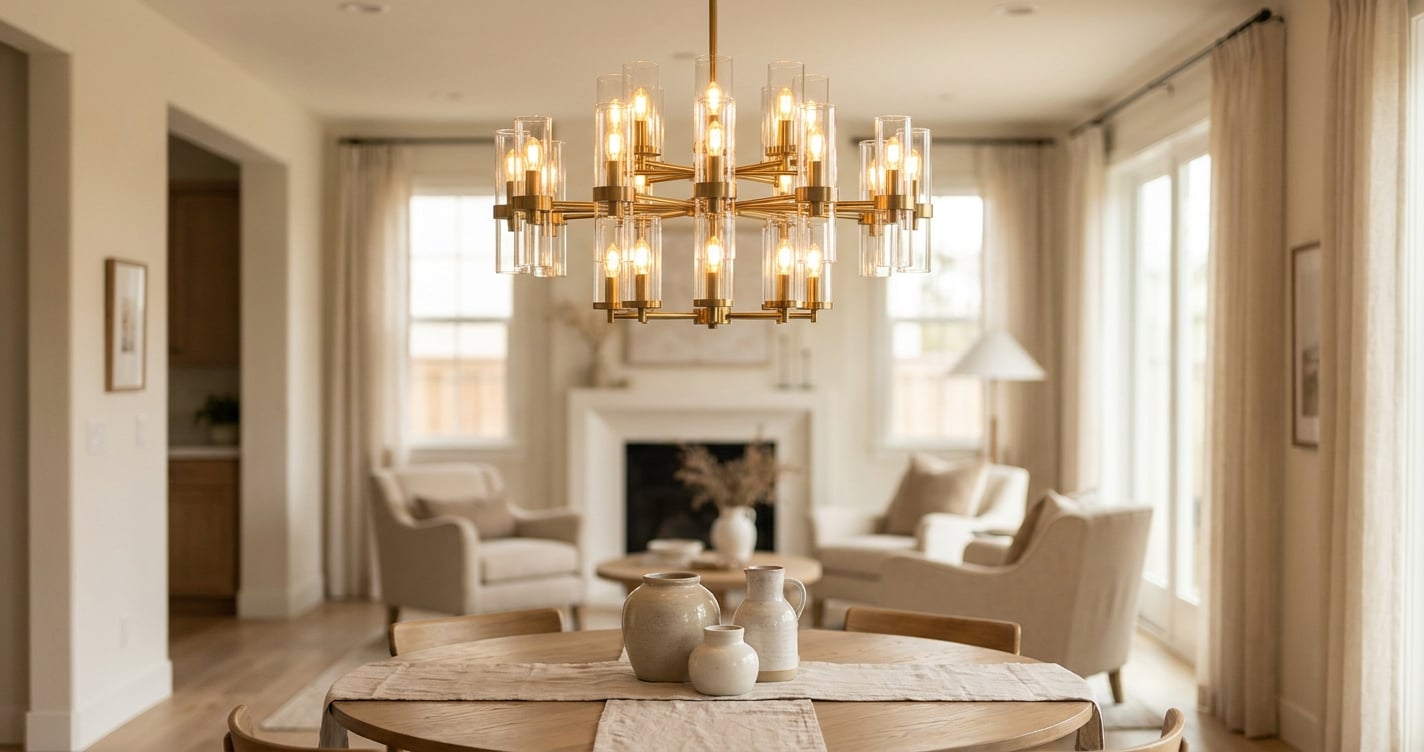
Consider the scale of the chandelier’s design itself. A very ornate, multi-tiered crystal dining room chandelier might look incredible in a grand dining room with high ceilings and formal furniture, but it could feel out of place in a cozier, more casual setting. Conversely, a very simple, geometric fixture might get lost in a highly decorated room. It’s all about balance. Our extensive collection of chandeliers has a range of options at different price points, from sleek contemporary designs to classic, intricate pieces, so you’ll definitely find something that speaks to your style.
| Pros of Matching Style | Cons of Not Matching Style |
|---|---|
| Creates cohesive look | Can make room feel disjointed |
| Enhances room’s aesthetic | May detract from other decor |
| Feels intentional and polished | Fixture might look out of place |
Illumination and Dimming: Setting the Mood with Your Dining Room Chandelier
A dining room chandelier isn’t just a pretty face; it’s a critical light source. The quality and quantity of light it provides are essential for setting the right ambiance. You’ll want enough light for dining, but also the flexibility to create a softer mood for entertaining or quiet evenings.
Look at the bulb count and recommended wattage for your chosen dining room chandelier. For most dining rooms, you’ll want a fixture that provides ample light, which often means multiple bulbs. However, the true magic for a dining area comes from a dimmer switch. Installing a dimmer is, in my opinion, one of the best investments you can make for any room, especially the dining room. It allows you to adjust the light from bright and functional for homework or crafts to warm and intimate for a dinner party.
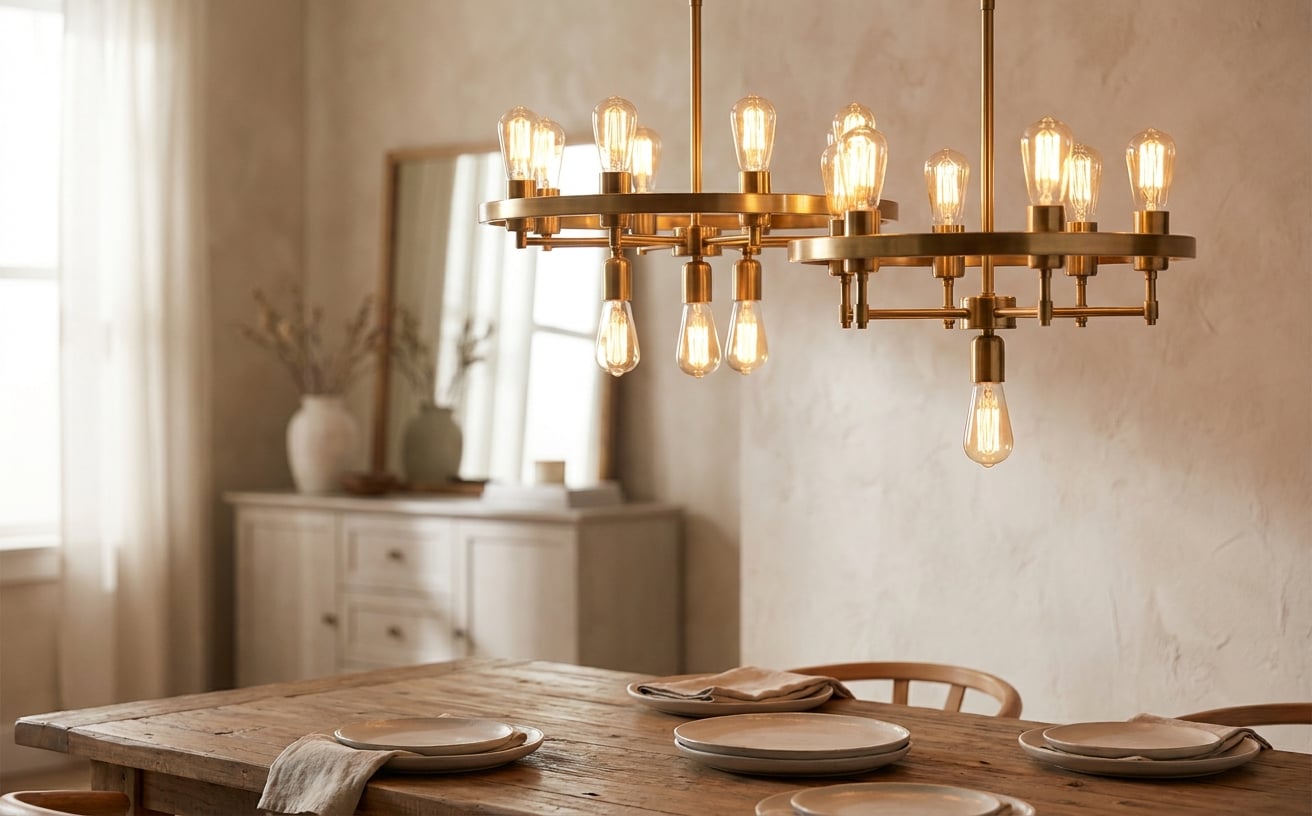
Consider the type of bulbs as well. LED bulbs are incredibly energy-efficient and long-lasting, and many are now available in a wide range of color temperatures, from cool white to very warm, inviting light. For a dining room, a warmer color temperature (around 2700K-3000K) usually creates a more inviting and comfortable atmosphere.
Installation: Bringing Your Dining Room Chandelier to Life
Once you’ve carefully selected the perfect dining room chandelier, the final step is installation. This is where safety and precision are paramount. While hanging a new light fixture might seem like a straightforward DIY task for some, it often involves working with electrical wiring, securing a heavy object to the ceiling, and ensuring proper support.
If you’re replacing an existing fixture and the wiring and support box are already correctly installed and rated for the weight of your new chandelier, you might feel comfortable tackling it yourself. Always, always turn off the power at the breaker first. However, for anything involving new wiring, moving an electrical box, or hanging a very heavy dining room chandelier (typically anything over 10 pounds), I’d strongly recommend hiring a licensed electrician in your area. It’s truly worth every penny for peace of mind, knowing it’s installed safely and correctly. They’ll ensure the junction box can support the weight and that all electrical connections are sound. Don’t take chances with electricity or heavy fixtures.
Frequently Asked Questions
How big should a dining room chandelier be?
The ideal diameter for your dining room chandelier is typically two-thirds to three-quarters the width of your dining table. Another common guideline is to add the room’s length and width in feet, and that sum in inches equals the approximate diameter you should aim for.
What if my dining room ceiling is very high?
For standard 8-foot ceilings, the bottom of the chandelier should be 30-36 inches above the table. If your ceiling is higher, add about 3 inches to that hanging height for every additional foot of ceiling height. This helps the chandelier feel proportionate to the taller space.
Should I use a dimmer with my dining room chandelier?
Absolutely, yes! A dimmer switch is highly recommended for a dining room chandelier. It provides crucial flexibility, allowing you to easily adjust the light from bright task lighting to a soft, ambient glow, perfect for creating different moods and atmospheres in your dining space.
What’s the best material for a dining room chandelier?
The “best” material depends on your personal style and existing decor. Popular choices include metal (such as iron, bronze, nickel, or brass), glass, crystal, wood, or even fabric. Consider what materials are already present in your dining room furniture and fixtures to ensure a cohesive look.
Choosing a dining room chandelier is an exciting part of decorating your home. By following these guidelines for size, height, and style, you’re well on your way to finding a fixture that not only illuminates your space but also elevates its entire look and feel. We’re confident you’ll find the perfect piece to complete your dining room’s story.