Choosing the perfect chandelier can feel a bit overwhelming, can’t it? You’re picturing that stunning centerpiece, but then you start scrolling online, and suddenly there are hundreds of options. It’s easy to get lost in the sheer variety of styles, sizes, and finishes. Don’t worry, you’re not alone. I’ve been there myself, trying to figure out how to buy the right chandelier for my dining room and entryway. This comprehensive chandelier buying guide is designed to cut through the confusion and help you confidently select a fixture that perfectly lights up your space and your life. We’ll break down everything you need to know, from initial measurements to installation tips, making your decision much simpler.
Getting the Size Right: Proportions are Everything
The biggest mistake I’ve seen people make when picking out a chandelier is getting the size wrong. Too small, and it looks lost. Too big, and it can dominate the room in an awkward way. It’s all about balancing the fixture with your room’s dimensions and the furniture it’s meant to illuminate. Let’s dig into how to find the right proportions, which is a crucial part of any good chandelier buying guide.
Dining Room Chandeliers: The Golden Rules
For dining rooms, the chandelier should be proportional to your dining table, not just the room itself. You want it to define the eating area without hanging too far over the edges.
- Diameter: A good rule of thumb is that your chandelier’s diameter (width) should be about one-half to two-thirds the width of your dining table. So, if your table is 42 inches wide, look for a chandelier between 21 and 28 inches wide.
- Linear Chandeliers: If you have a long, rectangular table, you might prefer a linear chandelier. For these, the length of the fixture should be about two-thirds the length of your table. For example, a 72-inch long table would pair well with a linear chandelier around 48 inches long.
Entryway and Foyer Chandeliers: Making a Statement
Your entryway chandelier often makes the first impression in your home, so getting the scale right is really important.
- Diameter: For a general guide, add the length and width of your room in feet. The sum of those numbers in inches is a good starting point for your chandelier’s diameter. For example, a 10-foot by 12-foot foyer would suggest a chandelier around 22 inches in diameter (10+12=22).
- Height: This is where ceiling height really matters. You’ll want the bottom of the chandelier to be at least 7 feet from the floor in standard entryways. If you have a two-story foyer, you can hang it higher, often aligning the bottom with the second-story floor line or slightly above it for dramatic effect.
Living Room Chandeliers: Ambient Light and Style
Living room chandeliers are often more about creating ambient light and a focal point than direct task lighting over a table.
- Diameter: Use the same room dimension calculation as for an entryway (room length + room width in feet = diameter in inches).
- Height: In a living room where people might walk under it, ensure the bottom of the fixture is at least 7 feet from the floor. If it’s over a coffee table or in an open area where no one will walk directly beneath it, you have a bit more flexibility, but still aim for good visual balance.
Expert Tip: Don’t just consider the physical measurements. Think about the visual weight of the chandelier. A fixture with a lot of crystals or a very ornate design will appear larger and take up more visual space than a minimalist, open-frame design of the same diameter. Balance this perception with your room’s overall feel.
| Room Type | Chandelier Diameter Guideline | Chandelier Height Guideline |
|---|---|---|
| Dining Room | 1/2 to 2/3 table width | 30-36 inches above table |
| Entryway/Foyer | Room length + width (in feet) = diameter (in inches) | Bottom at least 7 feet from floor (higher for two-story) |
| Living Room | Room length + width (in feet) = diameter (in inches) | Bottom at least 7 feet from floor (if walk-under) |
Hanging It Right: Where to Position Your Chandelier
Once you’ve got the dimensions figured out from this chandelier buying guide, the next step is thinking about exactly where it’ll hang. Proper placement is just as important as the right size for achieving that perfect look and feel.
Dining Room Placement
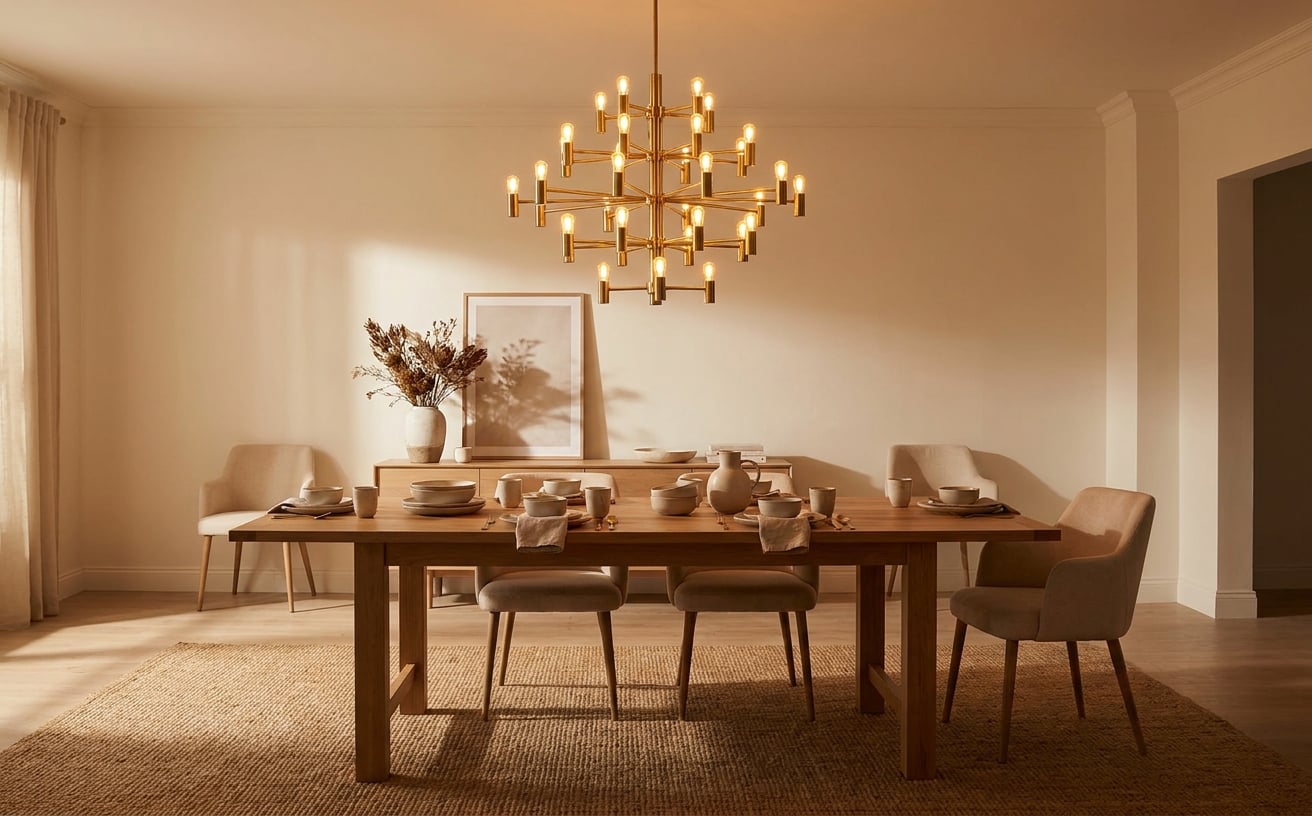
As mentioned, 30-36 inches above your dining table is the sweet spot. This height allows for clear conversation across the table and prevents the light from shining directly into people’s eyes. If you have a very tall ceiling (say, over 9 feet), you might go a little higher, but never more than 40 inches above the table. It’s a balance of form and function.
Entryway and Foyer Placement
Again, the 7-foot minimum clearance from the floor is crucial for walk-under areas. For higher ceilings, consider the visual line. You don’t want it to look like it’s floating too high or too low in a grand space. If you’re swapping an old fixture for a new, heavier chandelier, you’ll want to ensure your junction box can support the weight. For anything involving new wiring or a heavy chandelier, I’d strongly recommend hiring a licensed electrician in your area, it’s worth every penny for peace of mind.
Living Room Placement
If your living room chandelier isn’t directly over a table, use the 7-foot clearance rule. If it’s over a coffee table, you can go lower, but ensure it doesn’t obstruct views or feel like it’s in the way. Always step back and look at it from different angles in the room to get a feel for the overall impact.
Style and Finish: Your Aesthetic Chandelier Buying Guide
Beyond size and placement, the style and finish of your chandelier really dictate the mood of your room. There are so many options, and your choice should reflect your home’s existing decor. This part of our chandelier buying guide helps you narrow down the visual aspects.
Matching Your Home’s Aesthetic
- Traditional: Think ornate details, crystals, candles, and classic shapes. Materials often include polished brass, bronze, or wrought iron.
- Modern/Contemporary: Clean lines, geometric shapes, and often minimalist designs. Finishes like brushed nickel, chrome, or matte black are common.
- Farmhouse/Rustic: Often features natural materials like wood, rope, or distressed metals. Simple, warm designs are typical.
- Industrial: Exposed metal, sometimes cage-like designs, and raw finishes like aged bronze or black iron.
- Bohemian: Eclectic, often incorporating beads, fabric, or unique artisan elements.
Popular Finishes: Pros and Cons
Choosing a finish isn’t just about what looks good; it’s also about how it interacts with the rest of your home’s hardware, like door handles, cabinet pulls, and other light fixtures.
| Pros | Cons |
|---|---|
| Polished Brass: Classic, warm, adds elegance, great for traditional or eclectic spaces. | Can look dated if not used thoughtfully, requires regular cleaning to maintain shine. |
| Brushed Nickel/Chrome: Modern, versatile, easy to clean, complements cool tones. | Can feel cold in some spaces, less impactful than a bolder finish. |
| Matte Black: Trendy, sophisticated, creates high contrast, works in many modern styles. | Can absorb light, might feel too heavy in a small room if not balanced. |
| Bronze (Oil-Rubbed/Aged): Rustic, traditional, hides dust well, durable finish. | Can be dark, might not suit light, airy spaces. |
| Wood: Natural, warm, unique, great for farmhouse or organic modern styles. | Can be harder to clean than metal, style-specific. |
If you’re shopping for a dazzling centerpiece for your dining room, our chandelier collection has a range of options at different price points.
Light Output and Dimming: Creating the Perfect Ambiance
A chandelier isn’t just a decorative piece; it’s a light source! Thinking about how much light you need and how to control it is essential for functionality and mood.
Lumens and Wattage
Forget wattage as your primary guide; lumens are what really tell you how bright a bulb is. The amount of light you need depends on the room’s size and purpose.
- General Guide: For ambient lighting, aim for about 20 lumens per square foot. So, a 12×15 foot living room (180 sq ft) would need roughly 3600 lumens.
- Bulb Types: LED bulbs are energy-efficient and long-lasting, and they come in various color temperatures (warm white to cool white). Incandescent bulbs offer a classic warm glow but use more energy.
The Magic of Dimmers
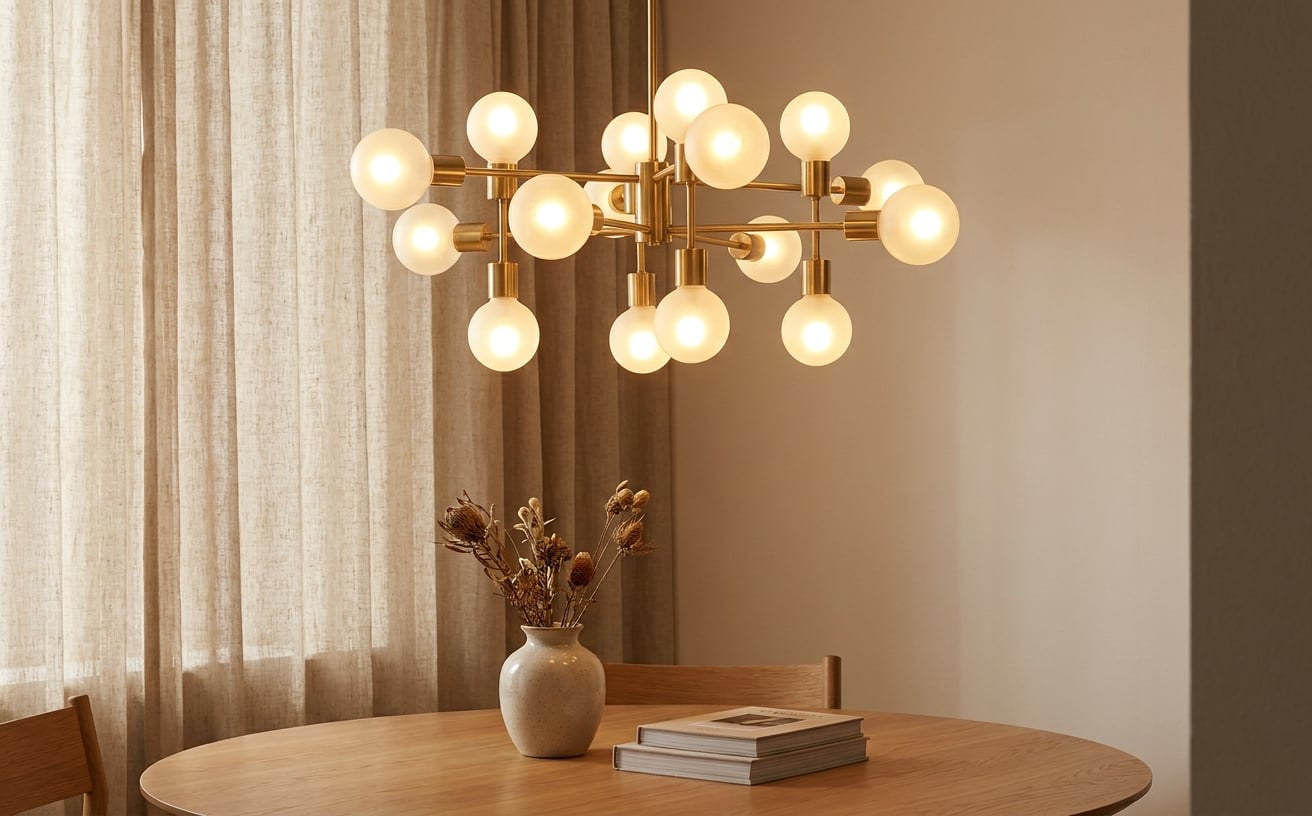
Installing a dimmer switch is a game-changer for any chandelier. It allows you to adjust the light level from bright task lighting to a soft, romantic glow. You’ll want to ensure your chandelier is rated for dimming and that you use dimmable bulbs. This flexibility is key to truly enjoying your fixture.
Installation Considerations: Safety First
You’ve chosen the perfect chandelier using this chandelier buying guide. Now comes the exciting part: getting it up there! Before you start, there are a few critical safety and practical considerations.
Ceiling Support
Chandeliers can be heavy, sometimes very heavy. Your existing electrical junction box in the ceiling might not be rated to support the weight of a substantial fixture. Standard boxes are usually rated for about 50 pounds. If your new chandelier is heavier, or if there’s any doubt, you’ll need to upgrade to a fan-rated or heavy-duty junction box, which often requires additional bracing in the ceiling joists. This is not a step to skip.
Hiring a Professional
Unless you’re a seasoned DIYer with electrical experience, installing a chandelier (especially a heavy or complex one) is best left to a licensed electrician. They’ll ensure it’s properly wired, securely mounted, and up to code. It’s a small investment for your safety and peace of mind, and it ensures your beautiful new fixture is installed correctly from the start. Trust me, I’ve seen this go wrong when folks try to do it themselves without the right tools or know-how.
Frequently Asked Questions
Can I put a chandelier in a bedroom?
Absolutely! A smaller, appropriately sized chandelier can add a touch of elegance and glamor to a master bedroom. Just ensure it’s not too large for the room and that you position it where it won’t be bumped into, usually over the bed or in the center of the room if the ceiling is high enough. This is a common question for our chandelier buying guide.
How many lights should a chandelier have?
The number of lights depends on the size of the room, the desired brightness, and the chandelier’s design. Larger rooms and those needing more illumination will benefit from more lights or higher lumen bulbs. A dining room might need 5-9 lights, while a small bedroom could be fine with 3-5. Dimmers are crucial here to manage brightness.
What’s the difference between a pendant and a chandelier?
Generally, a chandelier is a multi-arm fixture designed to provide ambient light and be a central decorative piece, often quite large. A pendant light usually hangs from a single rod or cord, often has one light source, and is typically smaller, used for task lighting or in groups. You wouldn’t typically use a pendant as the sole overhead light in a large dining room.
How do I clean a chandelier?
Regular dusting with a soft, lint-free cloth or a feather duster is key. For more thorough cleaning of crystal chandeliers, you can use a spray-on cleaner (designed for crystals) that allows dirt to drip off, or carefully wipe each crystal with a damp cloth and mild soap solution. Always turn off the power at the breaker first!
When do I need an electrician for a chandelier?
You should always consult a licensed electrician if you’re installing a new chandelier where there was no previous fixture, if the new chandelier is significantly heavier than the old one, or if you’re unsure about the wiring or the junction box’s capacity. It’s best to be safe when dealing with electrical work and heavy fixtures.
Finding your perfect chandelier doesn’t have to be a headache. By following this chandelier buying guide and focusing on size, style, and safety, you’re well on your way to selecting a fixture you’ll adore for years to come. Feel free to browse our extensive collection to find the ideal statement piece for your home.