You’ve moved into a new place, or perhaps you’re just tackling a long-neglected room, and then it hits you: there’s no ceiling light fixture. Just a blank ceiling, maybe a wall switch that controls nothing, or perhaps an outlet. It’s a common problem, leaving you wondering how to light a room with no overhead lighting effectively, making it feel inviting instead of like a cave. You don’t want to live with just a single lamp shoved in a corner, do you? That’s not going to create the kind of atmosphere you’re dreaming of. The good news is, you’ve got plenty of excellent options to brighten things up without calling in an electrician for major wiring work, which can be a huge undertaking.
Understanding Your Lighting Needs When There’s No Overhead Lighting
Before you start buying lamps, let’s think about what your room actually needs. Good lighting isn’t just about brightness; it’s about layers. You’ll want to combine different types of light to achieve a balanced and functional space. Trying to light a room with no overhead lighting requires a bit more planning than a room with a built-in fixture. Think about the room’s purpose. Is it a living room for relaxing, a home office for working, or a bedroom for winding down?
Ambient Lighting: The Foundation
Ambient lighting provides the general illumination for the entire room. Without a ceiling fixture, you’ll need to create this base layer using other sources. It’s the light that lets you move around safely and comfortably. Don’t underestimate its importance; it sets the mood for everything else.
Task Lighting: For Specific Activities
This type of lighting is focused on specific areas where you perform tasks, like reading in a chair, working at a desk, or cooking. It’s usually brighter and more direct. You’ll want to place these lights carefully to avoid glare and shadows.
Accent Lighting: Highlighting Features
Accent lighting is all about drama. It draws attention to architectural features, artwork, or plants. It adds depth and visual interest to a room. This is where you can really show off your style and make the room feel special.
Building Your Layers Without a Ceiling Fixture
Let’s dive into the practical solutions for rooms with no overhead lighting. It’s all about strategically placing fixtures that serve different purposes. You’re essentially building your own “ceiling light” effect from the ground up, or rather, from the walls and corners.
Floor Lamps: The Workhorses of Ambient Light
Floor lamps are your best friends when you have no overhead lighting. They come in so many styles, from sleek modern designs to traditional ones. A tall, upright floor lamp with a diffuser can bounce light off the ceiling, mimicking the effect of an overhead fixture. I’ve seen this mistake a lot: people buy a floor lamp with a downward-facing shade, and it just creates a pool of light on the floor, leaving the rest of the room dim. Look for upward-facing bowls or drum shades that spread light widely.
- Torchiere lamps: These are perfect for ambient light. They direct light upwards, reflecting it off the ceiling to create a soft, diffused glow across the whole room. They’re excellent for general illumination.
- Arc lamps: If you need light over a seating area, but can’t hang a pendant, an arc lamp is a fantastic substitute. Its arm extends out, allowing the light source to hang over a sofa or armchair, providing both ambient and task lighting.
- Multi-head floor lamps: Some designs feature multiple adjustable heads, letting you direct light in different directions, serving multiple purposes from one fixture.
| Pros | Cons |
|---|---|
| Excellent for ambient light | Take up floor space |
| Many styles available | Can be tripped over if placed poorly |
| Portable, easy to move | May not be enough for very large rooms alone |
Table Lamps: Adding Warmth and Task Lighting
Table lamps are essential for adding warmth and localized light. They’re great for task lighting on side tables, nightstands, and desks. The right table lamp can also be a beautiful decorative element, contributing to the room’s overall aesthetic. Don’t just pick one at random; consider its height and shade.
- Bedside tables: A pair of matching table lamps provides symmetrical light for reading and balances the room.
- Side tables: Place a table lamp next to a sofa or armchair for comfortable reading light and to fill in dark corners.
- Desk lamps: Essential for any workspace, these provide focused, bright light directly where you need it.
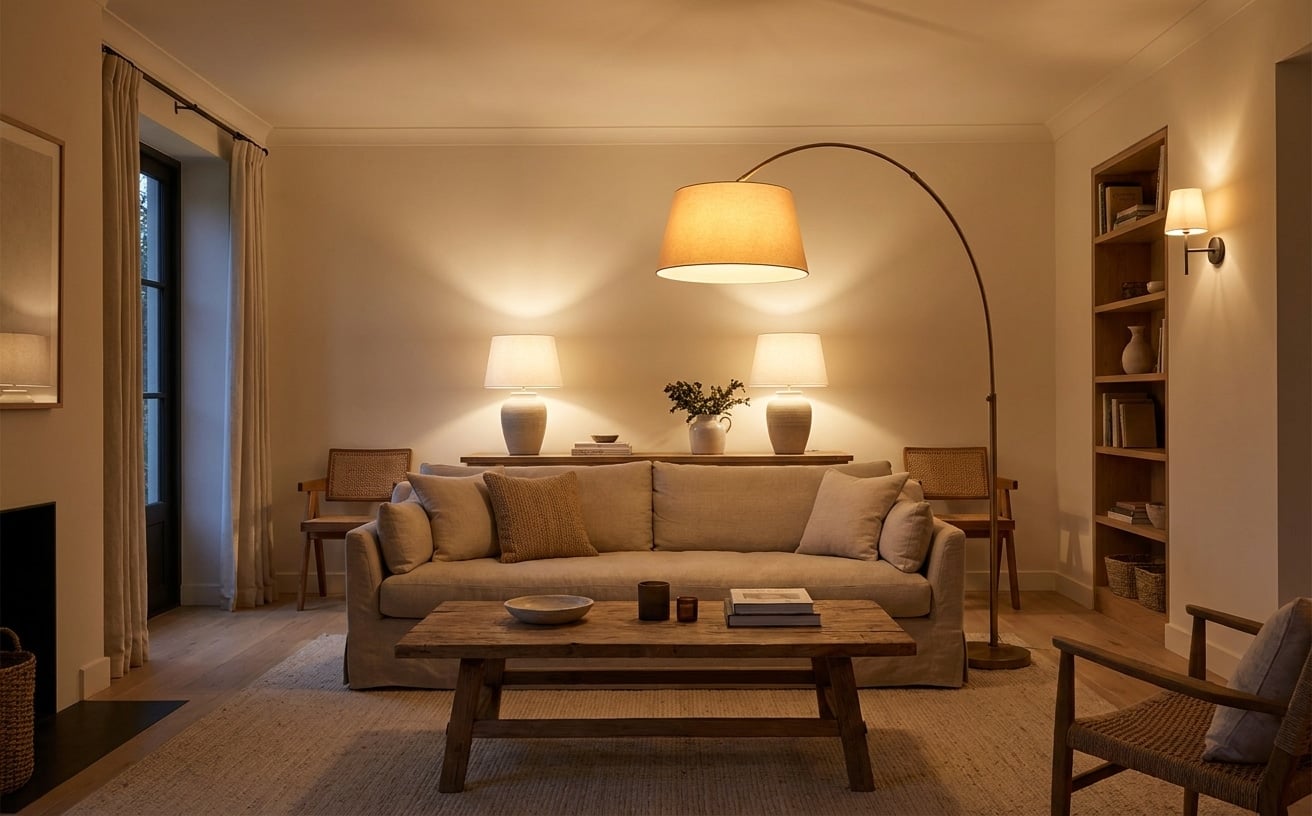
Wall Sconces and Plug-in Pendants: Creative Overhead Alternatives
Just because you don’t have built-in wiring for ceiling fixtures doesn’t mean you can’t use wall-mounted options. Many wall sconces are designed to plug directly into an outlet, offering a more integrated look than a typical lamp. They can provide upward or downward light, or both. You can even find plug-in pendant lights that hang from a hook in the ceiling and then drape down to an outlet on the wall. This is a brilliant way to get a suspended light source without the electrician.
- Plug-in sconces: These can flank a fireplace, bed, or mirror, providing lovely ambient or accent lighting. They’re a great way to elevate the look beyond just freestanding lamps.
- Plug-in pendants: Hang one above a dining table, a reading nook, or even in a corner to create a focal point. You’ll need a ceiling hook, but no electrical work is involved. For anything involving drilling into studs or hanging a heavy fixture, I’d suggest ensuring you use the right anchors and tools. If you’re unsure, it’s always smart to consult a handy person or a licensed electrician.
How to Light a Room No Overhead Lighting with Smart Solutions
Beyond just the type of fixture, think about how you control the light. Smart solutions can make a huge difference in convenience and atmosphere. You’re not stuck with just on/off switches.
Dimmer Switches and Smart Bulbs
Since you’re likely plugging everything into outlets, traditional wall dimmers aren’t an option. However, many floor and table lamps now come with built-in dimmers. Even better, invest in smart bulbs. These screw into any standard lamp and can be controlled via an app or voice assistant. You can dim them, change their color temperature, and even schedule them. It’s a fantastic way to adjust the mood of your room throughout the day.
Layering Light Sources for Maximum Effect
The real trick to how to light a room no overhead lighting is layering. You don’t want one super bright lamp. Instead, combine several lower-wattage sources. For a 12×15 foot living room, for example, you might use:
- One torchiere floor lamp for general ambient light.
- Two table lamps on side tables for task lighting and warmth.
- One arc lamp over the sofa for reading.
- Maybe a plug-in sconce to highlight a piece of art.
This combination creates depth and ensures every corner of the room feels well-lit and welcoming. It also prevents harsh shadows and glare.
The Importance of Bulb Type for Rooms with No Overhead Lighting
The type of light bulb you choose makes a huge difference. Don’t just grab the cheapest one.
- LEDs: They’re energy-efficient, long-lasting, and come in a wide range of color temperatures.
- Color Temperature: This is measured in Kelvins (K). Lower numbers (2700K-3000K) produce a warm, yellowish light, similar to incandescent bulbs, great for living rooms and bedrooms. Higher numbers (3500K-5000K) are cooler, whiter lights, better for task areas like a home office.
- Brightness (Lumens): Forget watts; lumens tell you how bright a bulb really is. For general ambient light, you’ll want bulbs with higher lumens, while accent lights can be lower.
Expert Tip: When selecting bulbs for a room with no overhead lighting, aim for a consistent color temperature across all your fixtures. Mixing warm and cool light sources can make a room feel disjointed and unsettling. Stick to one Kelvin range for a harmonious glow.
Mirrors and Reflective Surfaces: Amplifying Light
Mirrors aren’t just for checking your outfit. They’re incredible tools for bouncing and amplifying whatever light you do have. Place a large mirror opposite a window to reflect natural light during the day. At night, position it strategically to reflect light from your lamps. A mirror above a console table with a lamp on it will double the light output. Similarly, glossy furniture, metallic accents, and light-colored walls will help reflect and spread light more effectively, making the room feel brighter and more open.
Specialty Lighting Solutions for No Overhead Lighting
Sometimes you need to think outside the box to achieve specific effects. These solutions can be fantastic problem solvers.
Up-lighting: Creating Drama and Height
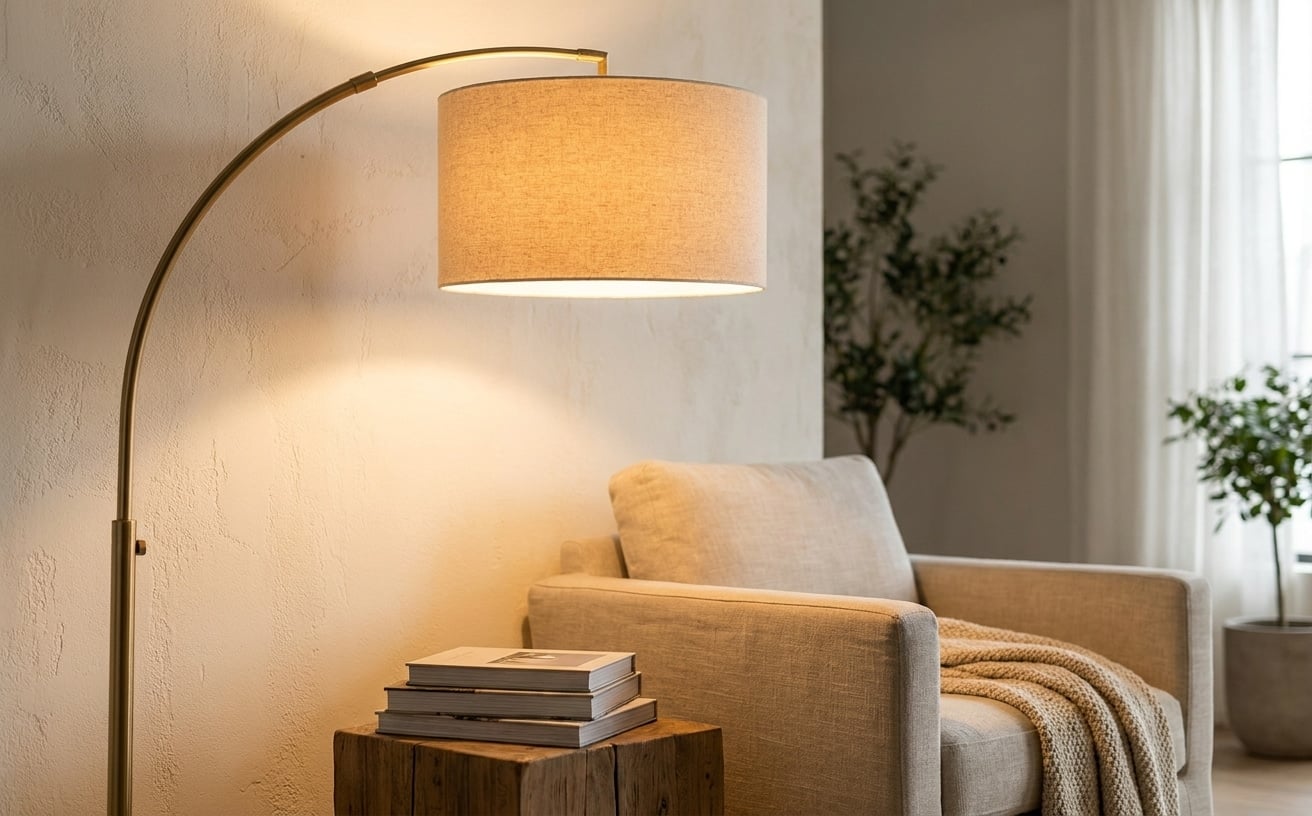
Small, discreet up-lights placed on the floor behind plants or next to architectural features can wash walls with light, drawing the eye upwards. This creates a sense of height and adds a dramatic touch, especially in corners that might otherwise feel dark and forgotten. They’re often very compact and plug right into an outlet.
Track Lighting Systems (Plug-in Options)
While traditional track lighting is hardwired, some brands offer plug-in track systems. These can be mounted to a wall or even a ceiling (with proper anchors, remember that electrician advice for anything heavy or complex) and then plug into a standard outlet. They provide multiple adjustable heads, giving you incredible flexibility to direct light exactly where it’s needed for ambient, task, or accent purposes. If you’re shopping for versatile lighting, our track lighting collection has a range of options at different price points.
Recessed Lighting (Surface Mount)
If you crave the clean look of recessed lighting but can’t cut into your ceiling, surface-mount recessed lights are an option. These fixtures sit directly on the ceiling surface and often plug into an existing outlet (or require minimal wiring to an existing junction box, again, consult an electrician if new wiring is needed). They offer a sleek, modern aesthetic and can provide good general ambient light. This is a step up from just lamps and can truly transform a room with no overhead lighting.
Portable Light Sources: Battery-Operated and Rechargeable
Don’t forget about portable options. Rechargeable lamps, LED strips, and puck lights can be used in countless ways. Stick LED strips under shelves for accent lighting, use puck lights inside cabinets, or place a rechargeable lamp on a bookshelf for an extra pop of light. These are fantastic for adding quick, temporary light where you need it, especially in areas far from outlets.
Making Your Room Shine
Transforming a room with no overhead lighting from dim to dazzling is entirely doable. It just takes a little creativity and strategic planning. By layering different types of fixtures, using smart bulbs, and thinking about how light interacts with your space, you can create a beautifully illuminated and inviting home. You’ll be amazed at the difference a well-thought-out lighting plan can make, even without a single ceiling fixture.
Frequently Asked Questions
Can I really get enough light in a large room without a ceiling fixture?
Yes, you absolutely can! The key is to use multiple light sources strategically. Combine a powerful torchiere floor lamp for ambient light with several table lamps and maybe an arc lamp. Spreading the light sources around the room prevents dark spots and ensures even illumination, making the room feel much brighter than relying on just one or two fixtures.
What’s the best way to get ambient light without overhead wiring?
Torchiere floor lamps are excellent for ambient light because they direct light upwards, bouncing it off the ceiling to create a widespread, diffused glow. Pairing these with other indirect light sources, like lamps with opaque shades that push light up and down, helps create a comfortable base layer of illumination.
How do I hide the cords from all these lamps?
Cord management is crucial when you have many plug-in fixtures. Use cord covers that match your wall color, or run cords discreetly behind furniture. Cable ties can bundle cords together, making them less noticeable. Some lamps even have built-in cord channels for a cleaner look.
Is it safe to plug many lamps into one outlet?
It’s generally safe as long as you don’t overload the circuit. Most modern lamps use LED bulbs, which draw very little power. However, avoid using multiple high-wattage fixtures on a single extension cord or outlet. If you’re unsure, or using many appliances alongside your lights, consider using a power strip with surge protection and ensure it’s rated for the total wattage of all connected devices.
Can I hang a pendant light without ceiling wiring?
Yes, you can use a plug-in pendant light. These fixtures come with a long cord that can be draped from a ceiling hook (you’ll need to install the hook securely into a ceiling joist or use appropriate anchors) and then plugged into a wall outlet. It’s a fantastic way to get the look of a pendant without any electrical work.
You’re now equipped with plenty of ideas to tackle that challenging room. Don’t let the lack of overhead lighting dim your design dreams. Explore our extensive lighting collections to find the perfect pieces that’ll bring your vision to life.